Related: How to hold 250 degrees in a kamado without a controller
A kamado's whole job is holding temperature. Everything else is marketing. I have been cooking competition barbecue for 18 years, and that single sentence is why a Kamado Joe Classic Joe III sits at the center of the kamado grill setup I recommend most often. Not because it is the cheapest 18-inch ceramic on the market and not because it is the prettiest. Because the divide-and-conquer system and the warranty reputation beat anything near the price, and because the pieces you put around it decide whether you fire it up twice a month or twice a week.
This is not a spec sheet recital. It is the order I would buy things in, and the reasons behind that order. One cooker, three accessories, four different cooks. The grill is the expensive part and the accessories are not, but the accessories are what make the expensive part worth owning.
A kamado also is not a set-and-forget appliance. It needs 30 to 45 minutes to heat soak and stabilize before meat goes on, and vent control is 90 percent of the cooking. Skip the soak and you will chase temperatures all afternoon. Get it right and an 18-inch ceramic will run a brisket overnight through a Georgia thunderstorm without a controller.
The Grill: Kamado Joe Classic Joe III
This is an 18-inch ceramic cooker in red, and the word that matters most in the name is standalone. There is no cart in the box and no nest in the box. You get the grill, a grill gripper, and an ash tool, and you are expected to figure out where it lives. That is not a knock. It is useful information, because it changes what you buy next.
The 18-inch size is the one I would pick for a family that cooks on weekends and holidays. A 13-inch kamado is a toy. A 27-inch is a commitment. Eighteen inches holds a full packer brisket with room to spare, a couple of racks of ribs, or a spatchcocked bird, and it still fits on a normal patio without dominating it.
What sold me on the Joe line is the divide-and-conquer setup. You can split the firebox and the cooking surface into zones, so half the grill runs direct over coals while the other half runs indirect behind a deflector. That is the difference between a grill and a smoker, and it is the reason the two half-moon accessories below exist at all.
The two things that will eventually fail on any ceramic cooker are the gasket around the lid and the firebox that holds the charcoal. When the gasket goes, your temperature control goes with it. When the firebox cracks, the question becomes whether the warranty replaces it without a fight. In my experience the Joe line answers that question better than most, and that is a big part of what you are paying for.
The included tools are not glamorous. The ash tool is the one you will touch every single cook, because a kamado does not dump ash like a kettle. You scoop it, and you scoop it more often than you think.
The Half-Moon Cast Iron Reversible Griddle
This is the accessory I would buy first, and it is the one that changes how often you use the grill on a weeknight. It is cast iron, it is reversible, and it is shaped as a half moon so it drops into one half of the cooking grate while the other half stays open for direct grilling.
The smooth side is a flat top. Smash burgers, bacon, eggs, griddle cakes, fried rice, peppers and onions, scallops that would fall through a grate. The ribbed side gives you sear marks and gives fat somewhere to run, which matters when you are cooking a steak over a 600-degree fire and do not want a grease flare licking the dome.
Cast iron behaves differently in a kamado than it does on a gas grill. The ceramic holds heat and radiates it back, so the griddle gets hot and stays hot. Preheat it with the dome during your heat soak, and treat it as part of the cooker rather than a pan you add at the last second. It also stays hot long after you shut the vents down, which is how people burn themselves. Let it cool before you pull it.
Season it, keep it dry, wipe it with oil, and never dunk it in water. It fits the Classic Joe and comparable kamado cookers with a half-moon grate system, so check your grate before ordering.
The Rolling Cart: Moving an 18-Inch Ceramic
Because the Classic Joe III arrives standalone, you have two options: build a table, or buy a nest. This is a powder coated rolling cart on casters, sized for the large kamado class, and it is also sold as a Big Green Egg accessory, which tells you the size class it was built around.
The casters are the whole point. A ceramic cooker is heavy, and anything heavy that cannot move tends to stay exactly where you put it, weather and all. Rolling it under the covered part of the patio before a storm, or turning it away from the siding when the wind shifts, is a one-person job with wheels and a two-person job without them. Powder coat also survives rain and sun better than paint, which matters in a humid climate like mine.
Fitment is the thing to check before you order. "Large" in a product name is a size class, not a brand promise, and an 18-inch kamado is the class these carts are generally built for. Measure the base of your cooker and the width of its band, then compare. A cart that does not fit is a cart you are shipping back.
Two practical notes. Small casters hate deck thresholds and gaps between boards, so pick your path before you roll a loaded cooker anywhere. And chock the wheels when it is parked, because you do not want several hundred pounds of ceramic deciding to travel on its own.
The Heat Deflector: An 18-Inch Stone That Doubles as a Pizza Stone
This 18-inch stone does two jobs, and the first one is the important one. Set between the fire and the food, it is a heat deflector. The coals heat the stone, the stone radiates gently upward, and the meat cooks on indirect heat instead of getting blasted from below. That is how you run a 12-hour brisket without turning the bottom of it into charcoal. It also catches the drips, which keeps your firebox cleaner and cuts down on the grease smoke that turns a clean cook bitter.
The second job is pizza. Get the dome heat soaked, get the stone hot, and slide a pie onto it. High-heat pizza is the party trick that convinces your neighbors a kamado was a good idea.
The name says no break, and I still handle any ceramic like it is a plate of glass, because thermal shock is real. Do not drop a cold stone over a roaring fire. Bring it up to temperature with the cooker, and let it come down the same way. In an 18-inch kamado a stone this size spans the firebox opening, which is exactly what a deflector is supposed to do. Scrape it, skip the soap, and store it flat.
How I judge kamado gear
I do not review a cooker until it has run 12 brisket cooks and a full temperature log, and I do not make storm-season claims without cooking through a storm season. That standard is why this article is about a setup and not a scoreboard.
What I am looking for is simple. Does it hold temperature through weather? Is the ceramic thick enough to matter, because two eggs at the same price can be very different pieces of ceramic? When the gasket and the firebox eventually go, does the warranty answer without a notarized confession? Does the accessory actually fit the cooker it claims to fit? And the one nobody puts on a spec sheet: does this make me want to cook on a Tuesday?
I also do not believe in set and forget. A kamado needs attention, period. Anyone selling you a ceramic cooker as an appliance you can ignore has never watched a gasket peel in its first season.
Analysis: how the four pieces work together
The four items here cover four different cooks, and that is the argument for buying them in this order.
The grill plus the heat deflector gives you low and slow. The grill with the griddle out of the way gives you direct searing over coals. The griddle gives you a flat top for burgers, bacon, and breakfast. The stone gives you pizza at high heat. One cooker, four jobs, and no second machine on the patio.
Here is the part people get backwards. The accessories cost a fraction of the grill, but they are what determine whether the grill earns its space. A standalone ceramic with no stand, no deflector, and no flat top is a very expensive way to cook hot dogs.
Note also who makes what. The cooker and the griddle are Kamado Joe pieces. The cart and the stone are not, and they are sold to fit the whole large kamado class, including Big Green Egg owners. That is good news for your wallet and a reason to measure carefully, because generic fitment is the one place this setup can go wrong.
What I would not buy
Skip the $200 kamado-style grills from the hardware store. The ceramic is thin, the gaskets fail, and the firebox cracks within a season, usually on the first cold snap. You will spend the difference twice and still end up buying a real cooker. I would also skip anything advertising heat resistant handles, because in my experience that phrase means the handle gets hot.
The kamado setup reference table
This is the order I would buy in, and what each piece is actually for. If you already own a large kamado of any brand, the bottom three rows apply to you.
| Product | Fits | Job in the setup | Verdict |
|---|---|---|---|
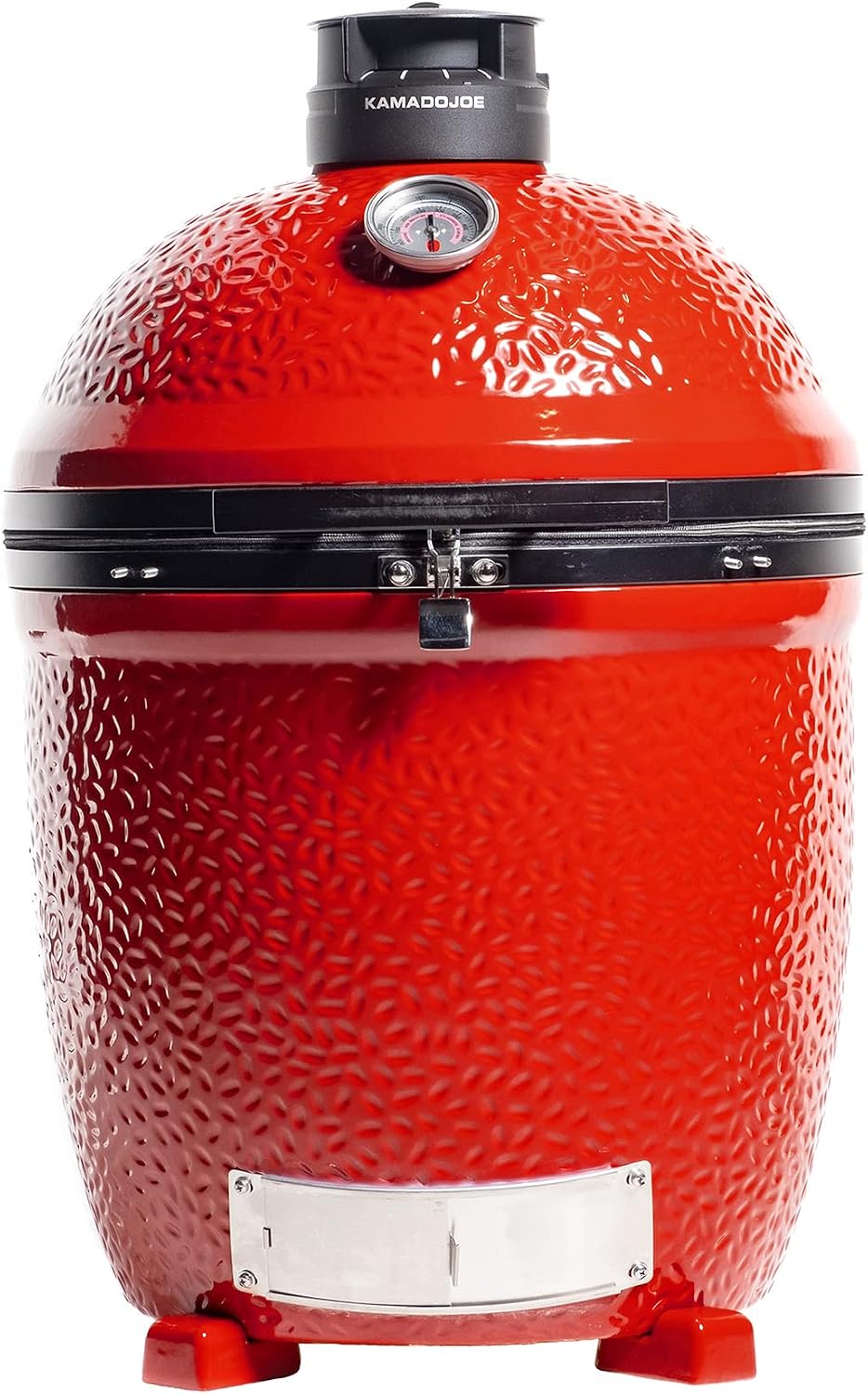 Visit on Amazon → Visit on Amazon →Kamado Joe Classic Joe III Standalone 18-inch Charcoal Grill |
18-inch kamado cooks | The cooker itself, direct and indirect | Buy first |
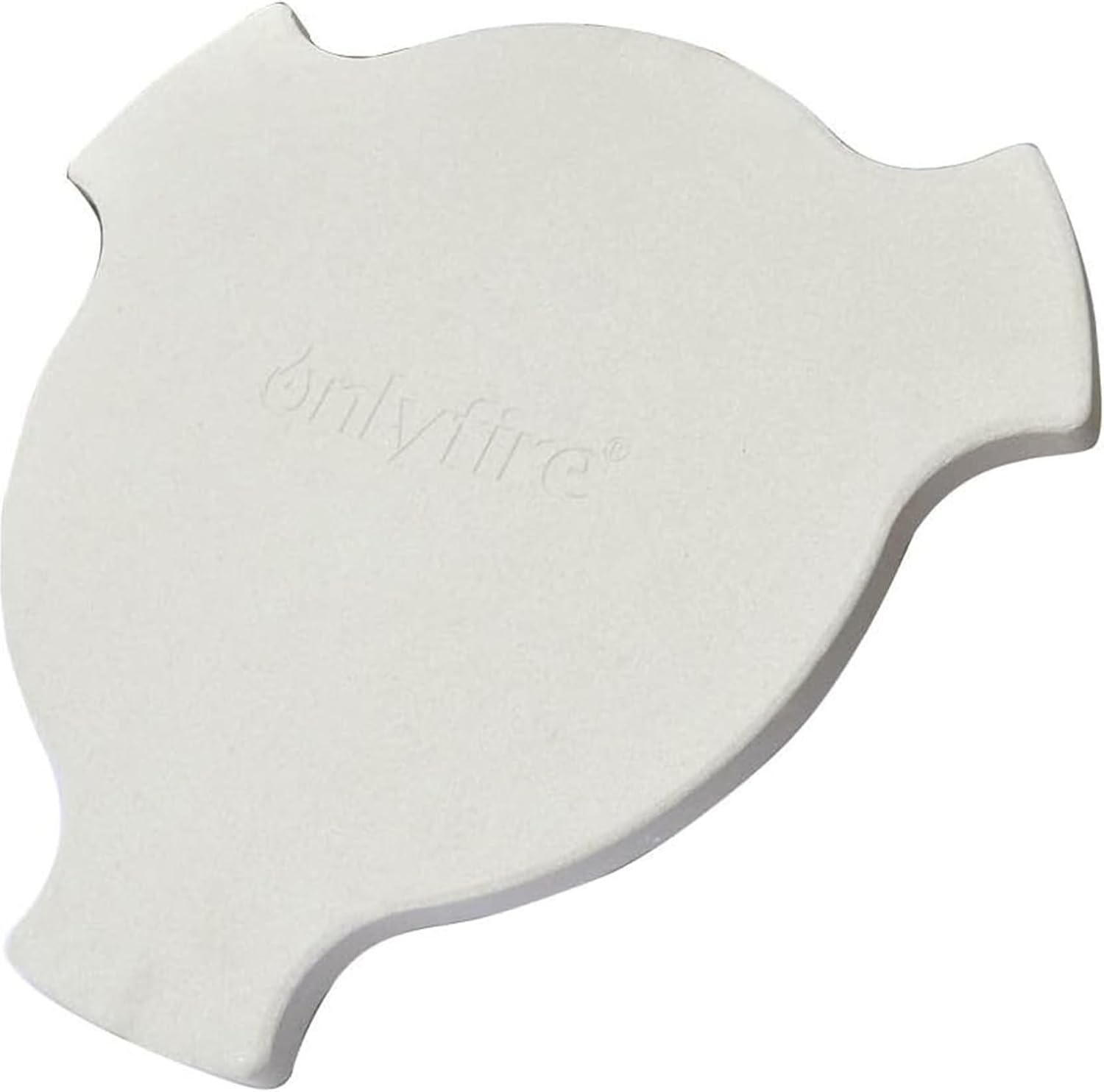 Visit on Amazon → Visit on Amazon →Onlyfire 18" Pizza Stone Heat Deflector |
18-inch kamados, Big Green Egg included | Indirect heat, drip protection, pizza | Buy with the grill |
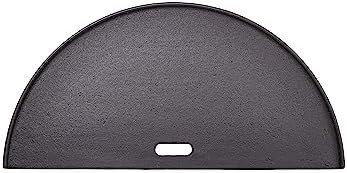 Visit on Amazon → Visit on Amazon →Kamado Joe Half-Moon Cast Iron Reversible Griddle |
Classic Joe and comparable half-moon grate systems | Flat-top searing, burgers, bacon, breakfast | Buy with the grill |
 Visit on Amazon → Visit on Amazon →Rolling Cart Rolling Nest for Large Kamado Grills |
Large kamado size class, measure your base | Moves the cooker, keeps it off the ground | Buy if you are not building a table |
Read the table as a sequence rather than a shopping list. The cooker is the decision. The stone and the griddle are the two cheapest upgrades that unlock the most cooks. The cart is the one you can solve with lumber if you would rather.
Should you buy the Kamado Joe Classic Joe III?
Yes, if you want one 18-inch ceramic that can smoke a brisket overnight and then sear a steak over coals the next evening. The divide-and-conquer system and the warranty reputation are what separate it from the field at this price, and the size is right for a family without eating your whole patio.
No, if you want set and forget. No kamado is that, and this one will punish you for skipping the heat soak. And no, if you are shopping purely on the lowest ceramic price you can find, because that is a different purchase with a different outcome.
Should you buy the accessories?
Buy the heat deflector and the half-moon griddle at the same time you buy the cooker. The deflector is what makes a kamado an indirect smoker instead of a very efficient grill, and the griddle is what gets you cooking on a Tuesday. Neither one costs much next to the grill, and both change what comes off it.
The rolling cart is the judgment call. A standalone ceramic has to live on something, and if you are not building a table, this is the fastest way to get it off the ground and movable. Measure your base first, chock the wheels when it is parked, and roll it out of the weather before the storm, not during it.