Related: Kamado Temperature Control: Vents, Soaks, and Stability
How to control temperature on a kamado
Let's be honest about what the marketing says. Every kamado brand claims their vents are "intuitive" and their ceramic holds temperature "effortlessly." I've owned a Kamado Joe Classic Series II for six years, cooked two briskets a week on it, and I can tell you that controlling temperature on a kamado is a skill you learn by screwing up, not by reading the manual.
I've overshot 250 by a hundred degrees and spent forty minutes choking it back down. I've frozen a gasket solid in a Minnesota winter.
I've got the burns and the ruined meat to prove it.
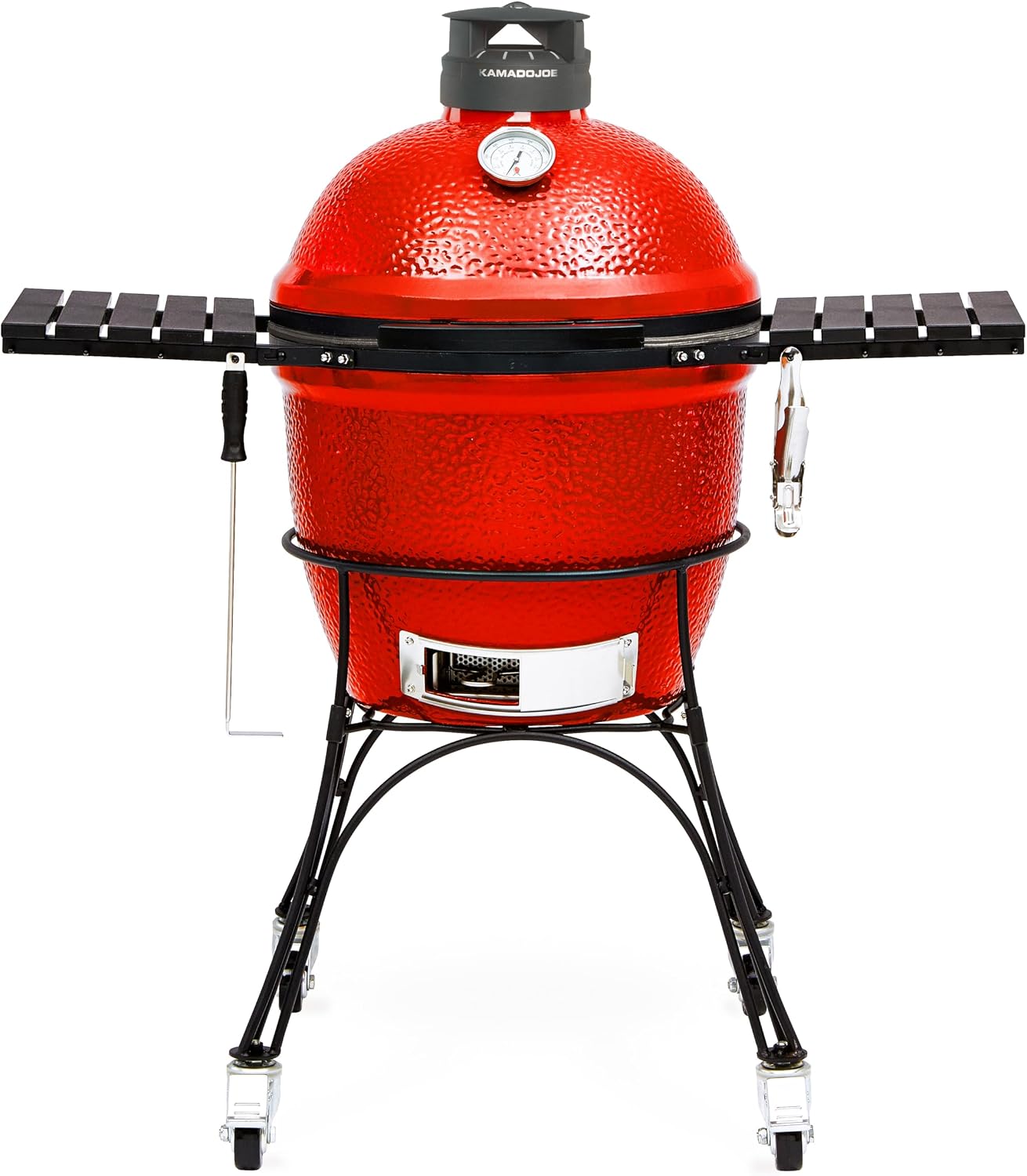
Kamado Joe Classic Joe Series II 18-inch Ceramic Charcoal Grill and Smoker with Cart, Side Shelves, Stainless Steel Grates and 250 Cooking Square Inches in Red, Model KJ-23RHC
Air hinge, Divide & Conquer racks, holds temp like a champ
Visit on Amazon →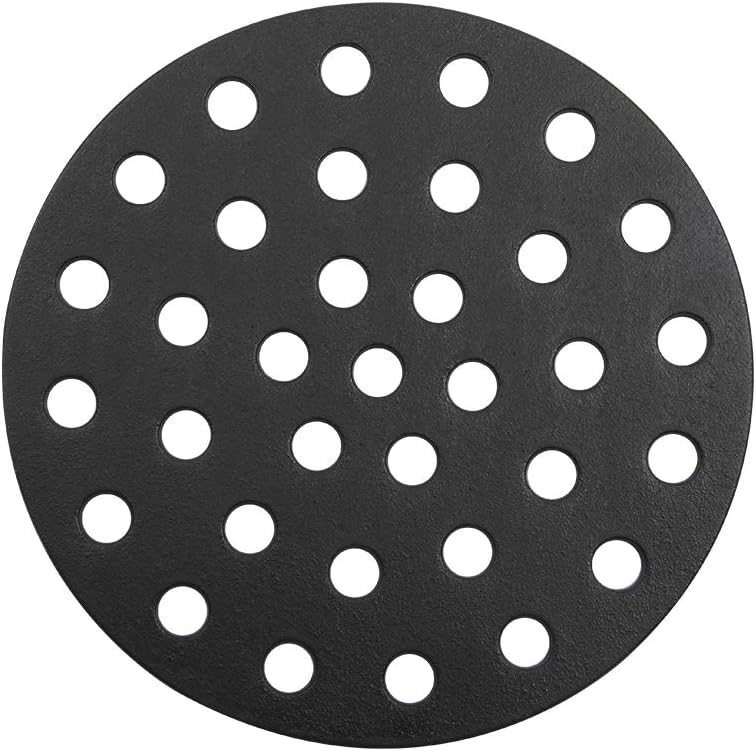
Dracarys 10.5 inch Cast Iron Charcoal Grate,BBQ High Heat Charcoal Plate Fit for Kamado Joe Classic Weber smokey joe Fire Grate Pit Boss Grill Parts Charcoal Grate Replacement Parts-10.5 inch
Fits Kamado Joe Classic (not BGE)
Visit on Amazon →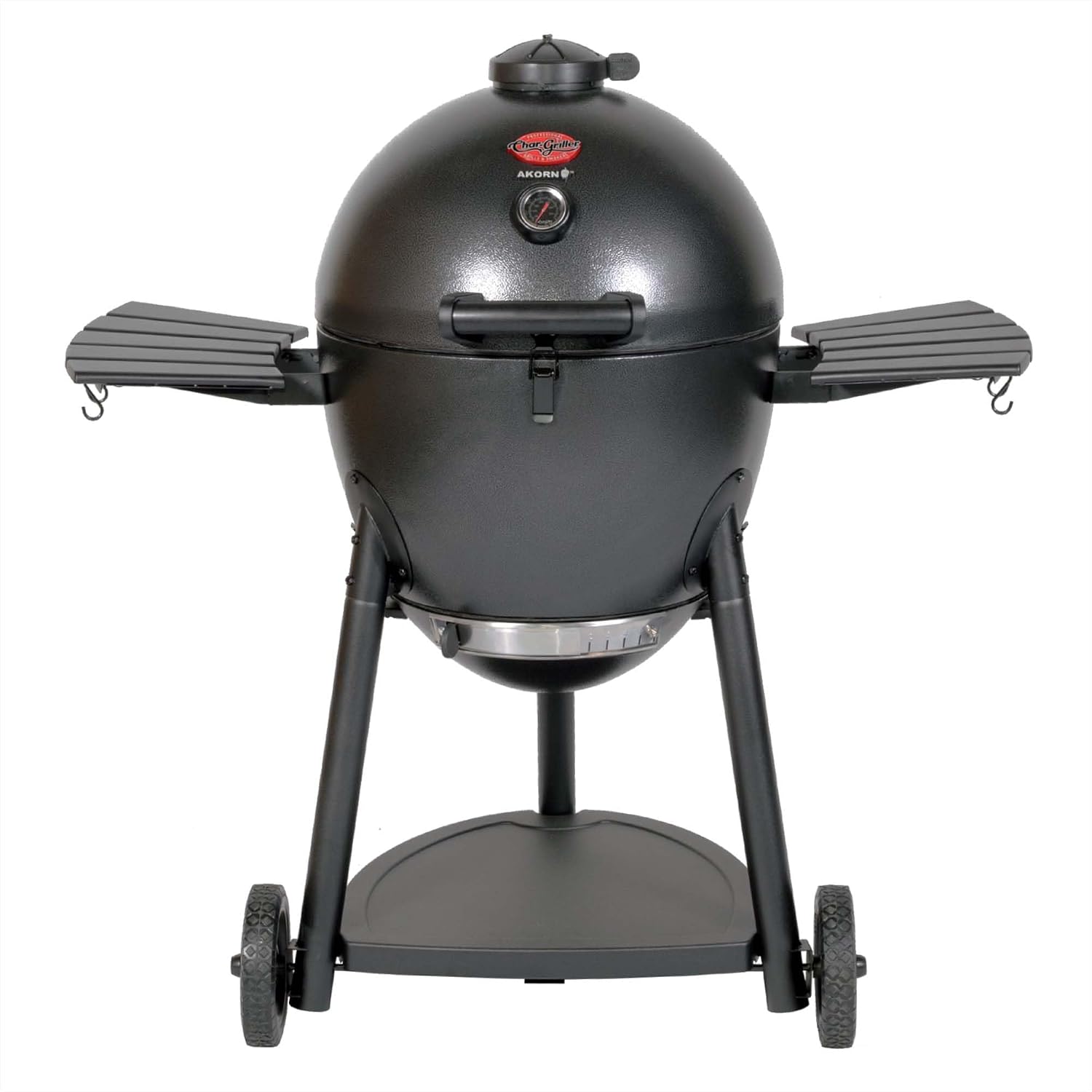
Char-Griller® AKORN® Kamado Charcoal Grill and Smoker with Cast Iron Grates, Warming Rack and Locking Lid with 445 Cooking Square Inches in Graphite, Model E16620
Looking for great searing, smoking, & superior low & slow cooking? Look no further than the Char-Griller AKORN Kamado charcoal grill, slate. With features like an easy dump ash pan & Dual adjustable d
Visit on Amazon →Char-Griller® AKORN® Kamado Charcoal Grill and Smoker with Cast Iron Grates, Warming Rack and Locking Lid with 445 Cooking Square Inches in Graphite, Model E16620
The Kamado Joe Classic II includes new innovation, featuring a thick-walled, heat-resistant shell that locks in smoke and moisture at any temperature. Smoke at 225F with precise temperature contro usi
Visit on Amazon →The only thing that matters: heat soak
Before I talk about vents and dampers, you need to understand heat soak. Ceramic is a thermal battery. When you light lump, the fire heats the ceramic walls, and those walls radiate heat back into the cooking chamber. The problem is that ceramic takes forever to warm up, and it takes forever to cool down. That's why you overshoot.
Here's what works after eighteen years of cooking competition and six years of kamado ownership. Light your lump in one spot, a chimney starter or a Looftlighter, and leave the dome open for ten minutes.
Then close it, set both vents to about halfway open, and let it climb. When the dome thermometer hits about 275, and you want to cook at 225, start closing the bottom vent to about a quarter inch.
Wait fifteen minutes. The temp will keep climbing because the ceramic hasn't soaked yet. That's the overshoot.
You let it settle, and it'll drop back down to 225 and sit there for eight hours.
The mistake I made for my first year was chasing the temp. I'd see 240 and close the vents completely, then it would drop to 180, and I'd open them again. I was fighting the grill all day. You don't chase. You overshoot, you let it settle, and you walk away.
The bottom vent is the boss
The top vent on any kamado is for fine-tuning. The bottom vent is where the real control lives. On my Kamado Joe Classic II, the bottom vent has a sliding plate with a slide-over lock. I leave that bottom vent at about a quarter inch open for a 225 degree cook.
That's it. The top vent stays at about a half inch. If I want to bump to 275 for chicken, I open the bottom vent to a half inch and wait twenty minutes.
I've tested this against the Big Green Egg, which uses a similar daisy wheel on top and a sliding plate on the bottom. Same physics. The Egg's controls are fine, but the gasket on the Egg is a known weak point.
My buddy Ray has run a Large Egg for fifteen years, and he replaces the felt gasket every two years like clockwork.
He's got the routine down to forty-five minutes and a ~$25 part. It's not a dealbreaker, but it's an expense you should know about.
What the cheap grills get wrong
I own an Akorn, the ~$249 steel-bodied kamado from Chargriller. It's my backup, and I've taken it tailgating more times than I can count. The temperature control on the Akorn is workable, but it's not ceramic.
The steel body loses heat fast, and the firebox is a cheap liner that I've replaced twice. The first crack showed up after about fourteen months.
I called customer service, they sent a replacement, and I installed it in forty minutes. It cracked again a year later.
At that point I bought the Big Joe and relegated the Akorn to camping duty.
Here's the thing about the Akorn. It holds 225 if you're diligent about the vents, but it's sensitive to wind in a way that ceramic isn't. A gust hits the side, and you'll see a ten degree swing. It also eats lump.
I've burned through a full load in six hours on a low and slow, where my Kamado Joe will run twelve hours on the same amount of charcoal.
For ~$249, it's a fine way to learn. But if you want set-and-forget, save your money.
The Vision Grills problem
I've cooked on a Vision Grills Pro S-series at a buddy's place, and I've got mixed feelings. The price, ~$399 to ~$599, is hard to argue with for a ceramic grill. The cast iron grate is a nice touch, and it comes with a cover and a nest in the box, which is more than you get from the Big Green Egg.
But the temperature control is not on the same level. The ceramic is thinner, and it doesn't hold heat as efficiently. My buddy went through a 20-pound bag of lump in three hours on a 250 degree cook. That's not a kamado, that's a charcoal pit with a ceramic liner. The paint also peels after a few seasons, which doesn't affect cooking but makes it look like hell.
The firebox is the bigger concern. I've seen complaints on the Kamado Guru forums about hairline cracks appearing within the first year. Vision will warranty it, but you're still dealing with the hassle of a replacement. If you're on a budget and you want ceramic, it's an option. But I'd rather buy a used Kamado Joe Classic II off Craigslist than a new Vision.
The Big Green Egg tax
The Big Green Egg Large runs ~$899 to ~$1,199 depending on where you buy it. That's the grill, nothing else. The nest is another ~$200. The platesetter, their name for a heat deflector, is another ~$80. The cast iron grate is ~$150. You're looking at ~$1,400 to make the Egg usable, and that's before you buy charcoal.
The Egg holds temperature as well as anything I've cooked on. The ceramic is thick, the warranty is real, and the dealer support is genuinely good. Ray has had his for fifteen years and only replaced the gasket and one firebox. That's a testament to durability.
But I can't get past the accessory pricing. Kamado Joe includes the Divide & Conquer system in the box, and I've used the half-rack for a brisket on one side and a pan of beans on the other. The Egg makes you buy everything separately. You're paying for the name, and the name is worth something, but it's not worth ~$500 in accessories.
The Kamado Joe Classic II is my answer
I've been cooking on my Kamado Joe Classic II for six years. I paid ~$749 on a Black Friday deal, and I'd pay full price today. The air hinge is the reason. You can open the dome with one finger, and it stays open. That sounds like a small thing until you're holding a 15-pound brisket in one hand and trying to flip a steak with the other.
The Divide & Conquer system is actually useful. I use the half-rack for a brisket and the other side for a pan of beans. I've done a reverse sear where I used the deflector on one side and left the other side open for direct heat. It works.
The felt gasket peeled off after about a year of heavy use. I replaced it with a nomex gasket from a dealer, ~$30 and forty-five minutes of my time. It's been fine since. The cart wobbles on uneven ground, which is annoying if you're trying to wheel it across a lawn.
And the warranty on the firebox is real. I cracked mine when a cold rain hit it after a hot cook, and Kamado Joe sent a replacement without a fight.
That's the test that matters.
Accessories that actually help
The Kick Ash basket is worth every penny. It keeps the airflow clean and makes ash cleanout a five-minute job instead of a vacuum session. I clean my firebox every two cooks, and the basket makes it painless.
The Smobot and FlameBoss 500 are genuinely useful if you want to sleep through an overnight cook. I've used both, and they'll hold your temp within five degrees through a thunderstorm. The FlameBoss 500 is the one I use now, and I've had it for two years.
It's a fan that mounts to the bottom vent and a controller that reads the dome temp. You set 225, and it adjusts the fan to hold it.
I've woken up at 6 a.m. after an overnight cook and found the temp at 228. That's witchcraft, but it works.
The Looftlighter is a torch that starts lump in under a minute. No lighter fluid, no chimney. I've had mine for three years and it's still going strong.
My honest bottom line
Temperature control on a kamado comes down to three things: heat soak, the bottom vent, and a gasket that doesn't leak. The Kamado Joe Classic II nails all three out of the box, and the Big Green Egg does too if you're willing to pay the tax. The Akorn is a great way to learn, but it's not a lifetime grill. The Vision is a budget option with real compromises.
I don't track prices day to day, so I won't pretend to know next week's deals. But I know what I'd buy with my own money. I'd buy the Kamado Joe Classic II again.
If you're just starting out and you're not sure you'll stick with it, get the Akorn and learn the fundamentals. If you know you're in this for the long haul, skip the starter grill and buy the Kamado Joe. You'll spend more upfront, but you'll spend less over the next ten years. That's the math that matters.