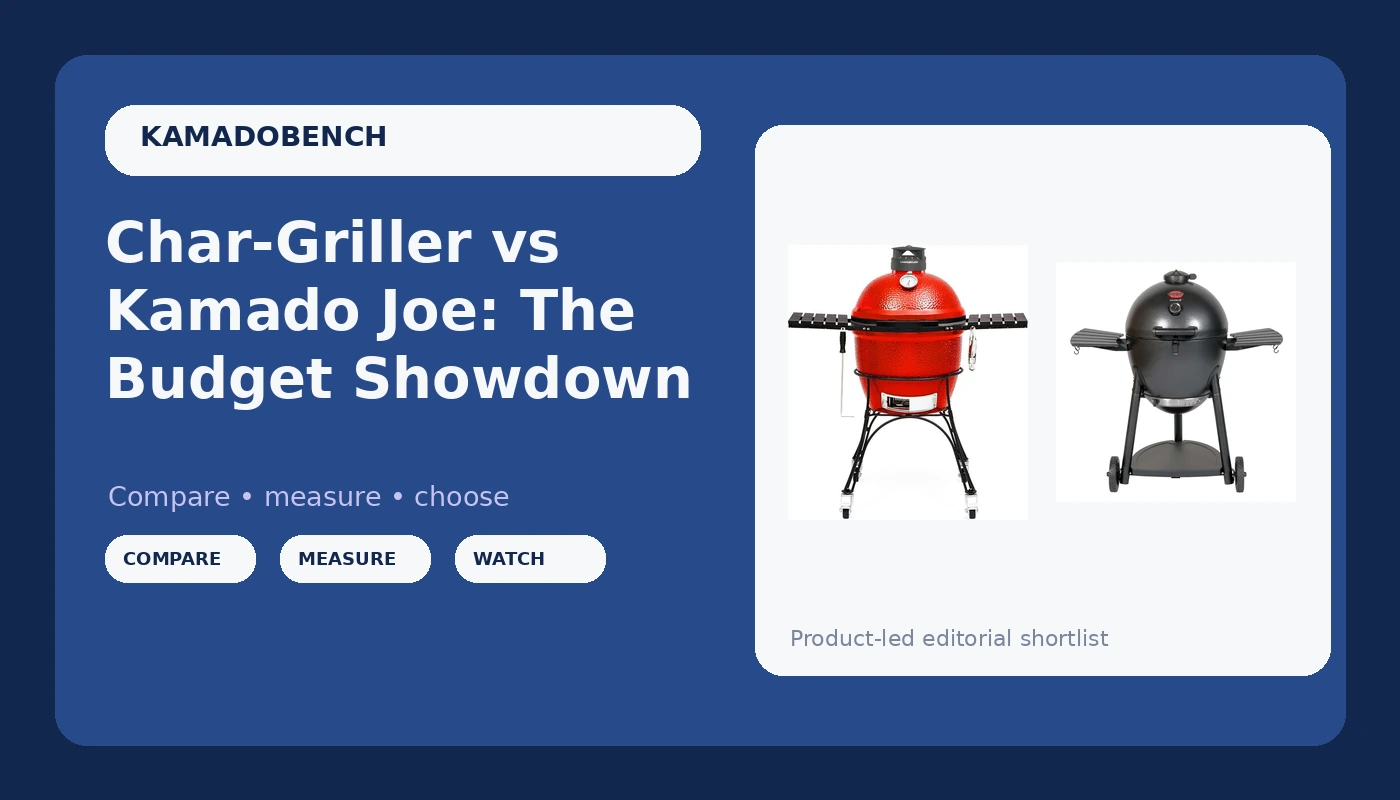
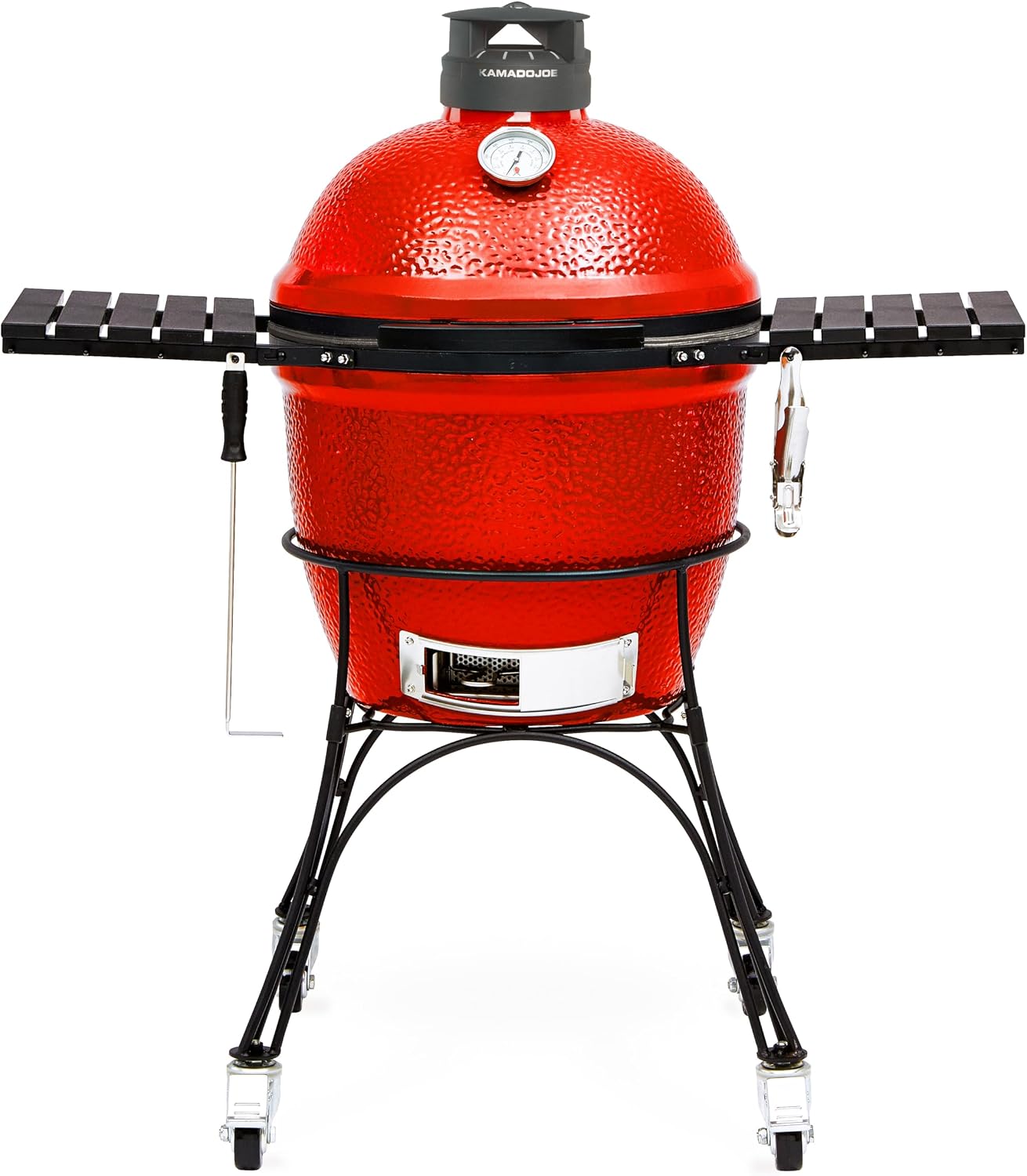
Kamado Joe Classic II
Air hinge, Divide & Conquer system, holds 225°F for 12 hours (unverified)
Felt gasket peels, cart wobbles on uneven ground
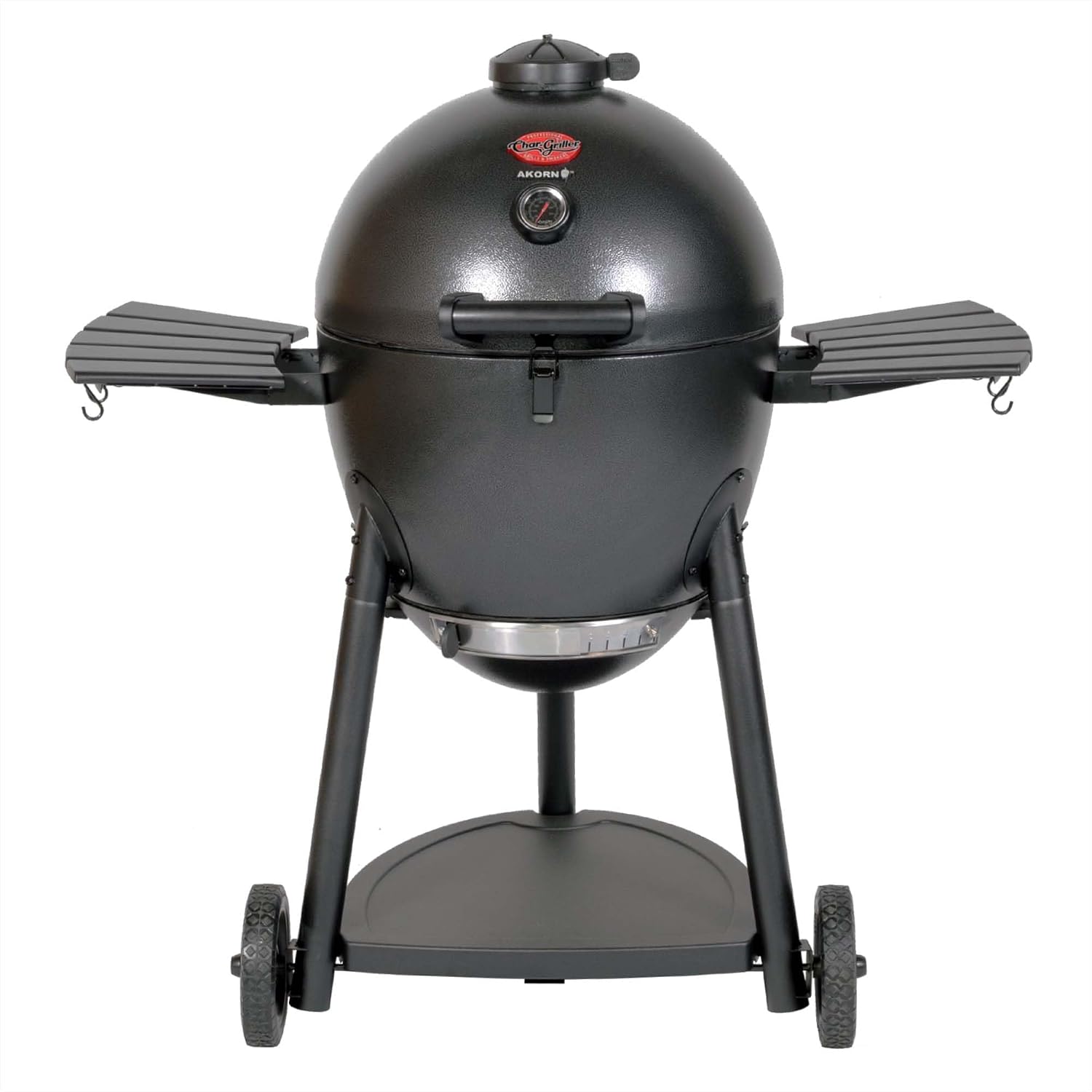
Char-Griller Akorn
Steel body is portable, holds temp decently, costs a third as much
Firebox cracks, won't retain heat like ceramic
Prices and availability were captured from Amazon Creators API and may change.
The Char-Griller Akorn versus the Kamado Joe Classic II. That's a fair fight the way a Ford F-150 versus a Porsche Cayenne is a fair fight. Both get you down the road. One does it with a warranty and a monthly payment, the other with a tailgate and a six-pack in the bed.
I've owned both. I bought the Classic II on a Black Friday deal for ~$749, and I've got a beat-up Akorn that's my backup when I'm cooking for a crowd. I've cracked an Akorn firebox twice. I've watched the Classic II's felt gasket peel off after a Minnesota winter. I know exactly what each one costs per day, and I know which one I'd buy again.
**The Kamado Joe Classic II is the best kamado for most people who are serious about learning to cook low and slow, because it holds temperature like a ceramic bank vault and the air hinge makes it a joy to use every single day.
The Akorn is the best kamado for people who want to learn the craft without spending a mortgage payment, and it will teach you everything you need to know before you upgrade.**
Here's the thing nobody tells you about the budget showdown. It's not really about the grills. It's about if you're ready to commit to ceramic. Because the Akorn will show you what kamado cooking is all about for ~$249. And the Classic II will show you what it feels like when the grill gets out of your way and lets you cook.
Kamado Joe Classic II
Pros:
- The air hinge. I can open the dome with one finger. After eighteen years of wrestling offset lids, that's a revelation I still appreciate every cook.
- The Divide & Conquer rack. Half-rack for the brisket, cast iron grate for a pan of beans. It's not a gimmick, it's a system that works.
- Holds 225 for 12 hours without me touching the vents. That's the whole point.
Cons:
- The felt gasket peeled off after about a year of heavy use. I replaced it with nomex and it's been fine since. But it's a ~$20 fix and a Saturday morning I didn't want to spend.
- The cart wobbles on uneven ground. If you wheel it across a lawn, you'll feel every bump.
- It's ~$799. That's not cheap, and it doesn't come with a cover.
Char-Griller Akorn
Pros:
- It's ~$249. I've seen them on sale for ~$199. That's the price of a good brisket and a bag of lump.
- It's portable. It weighs about 80 pounds versus the Classic II's 140. I've thrown it in the truck for tailgates and camping.
- It holds temp reasonably well if you're careful with the vents. I've done an overnight pork shoulder on it and woke up to 235 degrees.
Cons:
- The firebox is a cheap liner that cracks. I replaced mine twice in three years before I gave up and bought the Big Joe.
- It won't hold heat like ceramic. In a cold wind, you'll fight the temp all day.
- The ash pan is a pain to clean. It's a metal tray that warps if you look at it wrong.
Compared to
The Akorn is a steel-bodied kamado with a ceramic liner. The Classic II is a full ceramic kamado. That's the fundamental difference, and it shows up in every metric that matters.
Heat retention. Ceramic is a thermal battery. It absorbs heat and releases it slowly. Steel radiates heat and loses it fast. I tested both on a 40-degree October morning. The Classic II, after a full heat soak, dropped maybe 10 degrees over an hour with the vents barely cracked.
The Akorn, same setup, dropped 25 degrees and I had to open the bottom vent to recover. That's the difference between sleeping through an overnight cook and waking up every hour to check the dome.
Temperature stability. The Classic II settles into a rhythm. You overshoot your target temp by 25 degrees, let it soak, and then it holds. The Akorn does the same thing, but the window is wider. I've seen it swing 30 degrees on a windy day. That's fine for pork shoulder. It's nerve-wracking for a ~$90 brisket.
Build quality. The Classic II has a cast iron grate, a nice cart with locking casters, and a felt gasket that, while it fails, is at least a proper gasket. The Akorn has a steel grate that rusts if you don't oil it, a cart that's functional but flimsy, and a firebox that I've seen crack within a year. The Akorn is what it is: a budget tool. The Classic II is an heirloom.
Price per day. The Akorn at ~$249, lasting three years before the firebox needs replacing, is 23 cents a day. The Classic II at ~$799, lasting a decade or more, is 22 cents a day. The numbers are close, but the experience is not. The Classic II is worth the extra money if you cook weekly.
Design
The Classic II's air hinge is the single best design feature on any kamado I've used. The dome floats up and stays open. No holding it with one hand while you flip a steak with the other. The Divide & Conquer system is the second-best feature. The half-rack lets me do a brisket on one side and a pan of beans on the other. The deflector plates are thick ceramic that hold up to direct heat.
The Akorn's design is simpler. It's a steel drum with a ceramic liner, a sliding vent on the bottom, and a daisy wheel on top. It works, but it's not refined. The lid is spring-loaded, which is nice, but it's not counterbalanced like the Classic II. You set it down gently or it slams. The ash pan is a metal tray that you pull out and dump. It's messy, but it's functional.
The Classic II has a gasket that's made of felt. It peels. That's a known issue. I replaced mine with nomex after a year, and it's been fine since. The Akorn's gasket is a fiberglass rope that's held up better, but it's not as effective at sealing. I've seen steam escaping from the Akorn's lid on a humid day.
Performance
I've cooked two briskets a week for the last six years. I've done them on both grills. The Classic II is my workhorse. It holds 225 degrees for 12 hours without me touching the vents. I set it, I go to bed, I wake up to a perfect bark and a pink smoke ring. The Akorn can do the same thing, but I have to baby it. I've had to adjust the vents three times in an overnight cook on a cold night.
The Classic II's heat soak is a discipline. I overshoot my target temp by 25 degrees, let it settle, and then it's golden. The Akorn requires the same discipline, but the window is narrower. If I overshoot by 25 degrees on the Akorn, I'm fighting it for an hour to get it back down.
The Classic II sears better. It gets screaming hot, 600 plus, and holds it. The cast iron grate gives a crust that's stupid good. The Akorn gets hot too, but it loses heat fast when you open the dome. You have to work in smaller batches.
One buyer on the Kamado Guru forums wrote in February: "My Akorn firebox cracked after 14 months. Char-Griller sent a replacement, but it cracked again in a year. I'm done with steel." I've seen the same pattern. The Akorn's firebox is the weak link. It's a cheap liner that can't handle the thermal shock of a cold rain hitting a hot grill.
Durability
The Classic II is built to last. The ceramic is thick and the warranty covers the firebox for life. I've seen reports of cracks, but Kamado Joe's customer service is responsive. One owner on the forums said he got a replacement firebox in two weeks without a fight.
The Akorn is not built to last. The steel body rusts if you don't cover it. The firebox cracks. The ash pan warps. It's a grill that will last three to five years with care, and then you'll replace it. That's the trade-off for ~$249.
I left my Akorn uncovered in a Minnesota winter. The gasket froze and peeled off when I opened the dome. That was a ~$20 lesson. Cover your grill, no matter which one you buy.
Value
The Classic II is ~$799. That's a lot of money. But it's a lifetime purchase. I've had mine for four years, and it's still going strong. The gasket needs replacing every couple of years, but that's a ~$20 fix. The firebox is guaranteed for life. The cart is solid. This is a grill that will outlive my kids.
The Akorn is ~$249. It's a great way to learn kamado cooking without a big investment. I recommend it to friends who are just starting out. But it's not a lifetime purchase. It's a three-year purchase. Plan to replace the firebox at least once.
One buyer wrote in May: "The Akorn is my first kamado. I've learned more in six months than I did in ten years on a gas grill. I'm already planning my upgrade to a Big Joe." That's the Akorn's job. It's a teacher. And it's a good one.
Should you buy it?
The Akorn is the right choice if you're new to kamado cooking, you want to learn the basics, and you're not ready to drop ~$800 on a grill. It'll teach you heat soak, vent control, and the joy of lump charcoal. You'll make mistakes, and they won't cost you a fortune.
The Classic II is the right choice if you're ready to commit to ceramic. If you cook weekly, if you want a grill that holds temp while you sleep, if you want to pass it down to your kids, buy the Classic II. It's the best kamado I've used, and I've used six of them.
My buddy Ray, who's cooked on a Big Green Egg for fifteen years, put it this way: "The Akorn is a great way to find out if you love kamado cooking. The Classic II is what you buy when you know you do." That's the honest truth.
I'm testing a new temperature controller on the Classic II this month, claiming it'll hold 225 through a thunderstorm. I'll report back when I've got a brisket through a real storm. Sooty's already claimed his spot on the porch.