Related: Kamado Temperature Control: Holding 250 All Night
Every fall somebody texts me a photo of a new ceramic cooker sitting in a driveway and asks the same question: what else do I have to buy? My answer never changes. The cooker is the easy part. The kamado grill accessories are what decide whether you cook on it twice a week or twice a summer.
I have cooked on offsets, drums, pellets, and a four thousand dollar ceramic egg that belongs to a friend with more money than patience. A kamado has one job, and that job is holding temperature. Everything bolted onto it either helps that job or gets in the way of it. So when I look at a setup like this one, a large ceramic cooker plus three pieces that hang off it, I am not asking whether it photographs well on a patio. I am asking whether each piece makes a nine hour cook at 250 degrees easier to hold.
That is the test. If an accessory cannot answer for itself at hour nine, it is clutter. Here is the short list I would hand somebody who just bought a large kamado and wants to spend the money once.
The Cooker: Primo Large Round Ceramic Kamado Grill
The Primo Large Round is the anchor of this whole setup, and it is the piece you should think about hardest, because you are going to own it for a decade. Primo builds both round and oval ceramics, and the round one is the simpler machine. One fire, one dome, one even zone of heat over the middle of the grate. That simplicity is not a knock. It is the reason a round kamado is so forgiving to learn on.
What matters on any ceramic cooker is the thickness of the walls and the lid, the quality of the seal around the rim, and how the firebox sits inside the base. A thick wall holds heat through a cold front. A gasket that seals properly is the difference between a cooker that cruises at 250 and one that climbs to 350 while you are not looking. The firebox is the part that eventually cracks, on every brand, and the warranty is the only thing that decides whether that is a fifty dollar problem or a new cooker.
Before you buy, ask two questions. Does the warranty cover the firebox and the gasket without a fight? And is the hardware, the hinge and the bands, stainless or painted steel? Painted hardware in a coastal climate will rust, and I say that as somebody who lives thirty minutes from the Atlantic.
Round also means you will want a deflector, because a round cooker with the fire straight under the grate is a direct heat machine. That is a fine thing for chicken and steaks. It is a terrible thing for brisket. Plan on buying indirect capability at the same time you buy the cooker.
Kamado Joe Half-Moon Cast Iron Reversible Flat-Top Griddle
This is the accessory people underrate. A half moon cast iron griddle drops into a half moon grate system, and it turns half your cooking surface into a flat top. The smooth side is for smash burgers, breakfast, searing scallops, and vegetables that would fall through the bars. Flip it over and the ribbed side gives you grill marks and lets fat run away from the food instead of pooling around it.
Cast iron inside a kamado is a different animal than cast iron on a gas grill. The ceramic surrounds it with radiant heat, so the griddle comes up to temperature evenly and stays there. You get a searing surface that behaves like a plancha without needing a second appliance on the patio.
Two rules. Season it and keep it seasoned, the same way you would a skillet, because a kamado is a humid environment when the lid is closed and bare iron will flash rust. And never leave it sitting in the cooker overnight after a cook, especially in a coastal climate. Pull it, wipe it, oil it, put it inside. Half moon shapes are also easier to store than a full round because they stack against a wall in the garage.
The one real limitation is fit. Half moon griddles are built for half moon grate systems, so check what your cooker actually uses before you order. If you run a full round grate with no split, this is not the accessory for you, and you should look at a full round griddle instead.
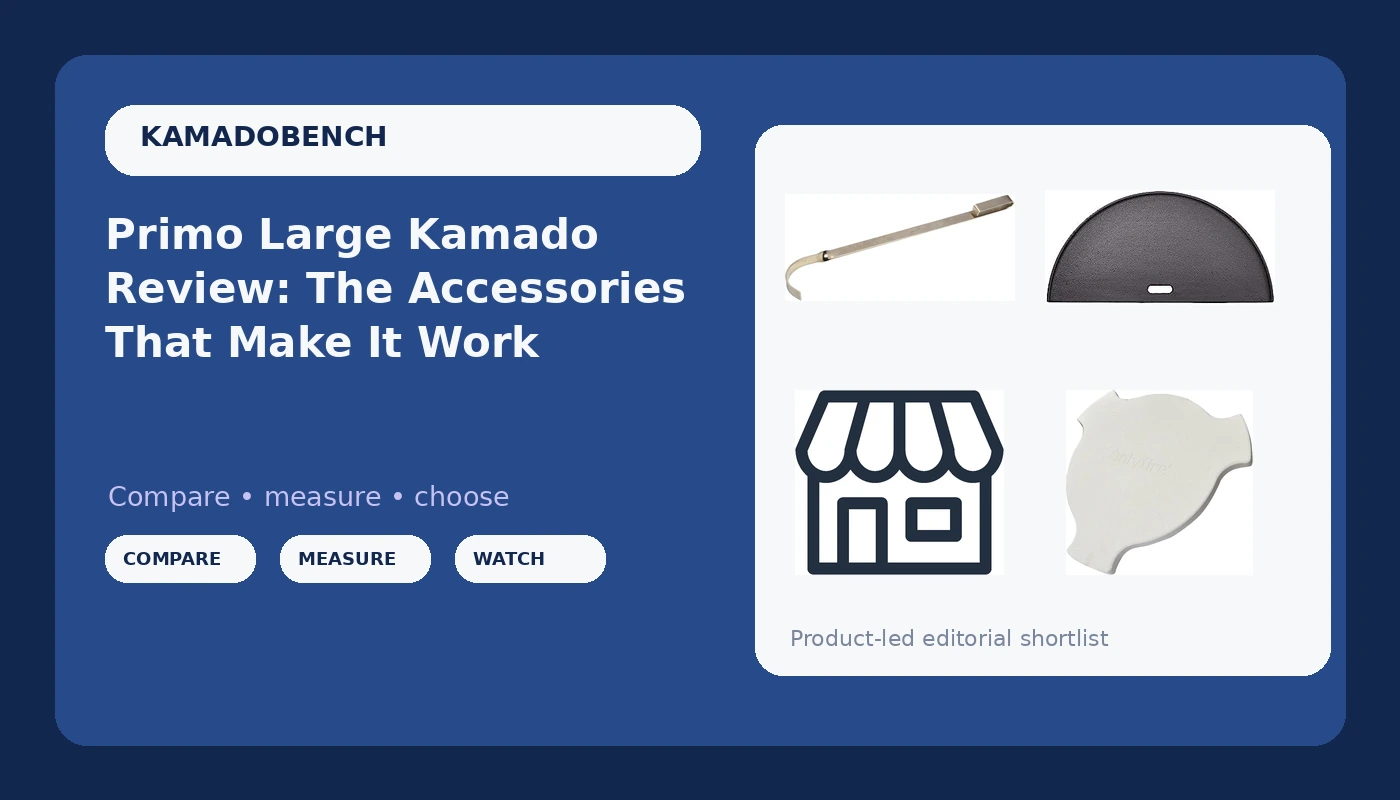
Rolling Cart Rolling Nest for Large Kamado Grills
Here is the accessory nobody wants to spend money on and everybody needs. A large ceramic cooker is not a one person lift. It is also not something you should be dragging across a deck on its own base, because the base of a kamado is not designed to slide, and the vibration is what cracks fireboxes and ruins gaskets.
A rolling nest or cart fixes that. This one is powder coated steel with casters, built for large kamado grills and sized for the common large ceramic footprint. Powder coat matters more than people think. It survives weather far better than painted steel, and it does not scratch the way a cheap finish does when you set a chimney starter on it.
What I look for in a cart comes down to three things. Locking casters, because a kamado that rolls when you bump it with your hip is a kamado that is going to meet the ground. A frame that holds the cooker level, because a ceramic sitting on an uneven surface puts stress on one part of the base. And enough clearance underneath to store a bag of lump charcoal and a chimney, which keeps your fuel dry and your deck clear.
Never roll a hot cooker. I do not care how stable the casters are. Ceramic does not like being jarred while it is at 400 degrees, and the trip across a door threshold is where things go wrong. Let it cool, then move it. If your patio is gravel or grass, this accessory is a lot less useful, because casters and soft ground do not get along.
Onlyfire 18" Pizza Stone Heat Deflector
This is the piece that turns a direct heat ceramic cooker into a barbecue. An 18 inch round stone in the size class that large round kamados are built around does two jobs, and the second one is why I like it better than a dedicated plate setter.
Job one is the deflector. Set the stone under the grate, between the fire and the food, and you have converted your kamado to indirect heat. That is your brisket, your pork butt, your ribs, your Thanksgiving turkey. The stone takes the direct radiant blast from the coals and spreads it out, which is why the meat cooks evenly instead of scorching on the bottom.
Job two is pizza. Pull the grate, raise the stone to grate level or just above it, and let the cooker come up to 550 or 600 degrees. A kamado with a heat soaked stone makes pizza that a kitchen oven cannot touch, because the stone delivers heat from below while the dome radiates from above.
Two habits keep a stone alive. Preheat it with the cooker rather than dropping it into a hot dome, because thermal shock is what breaks ceramic, and the product name on this one literally promises it will not break, which is the feature you are paying for. And keep it dry. A stone that has been sitting out in the rain and then goes into a hot kamado is a stone that is going to complain. Store it indoors when you are not cooking.
Kamado grill accessories reference table
This is the short list, laid out the way I keep it in my own notes. Fits is what the piece is built for, and Notes is the thing that actually decides whether you use it or store it.
| Item | Fits | Job | Notes |
|---|---|---|---|
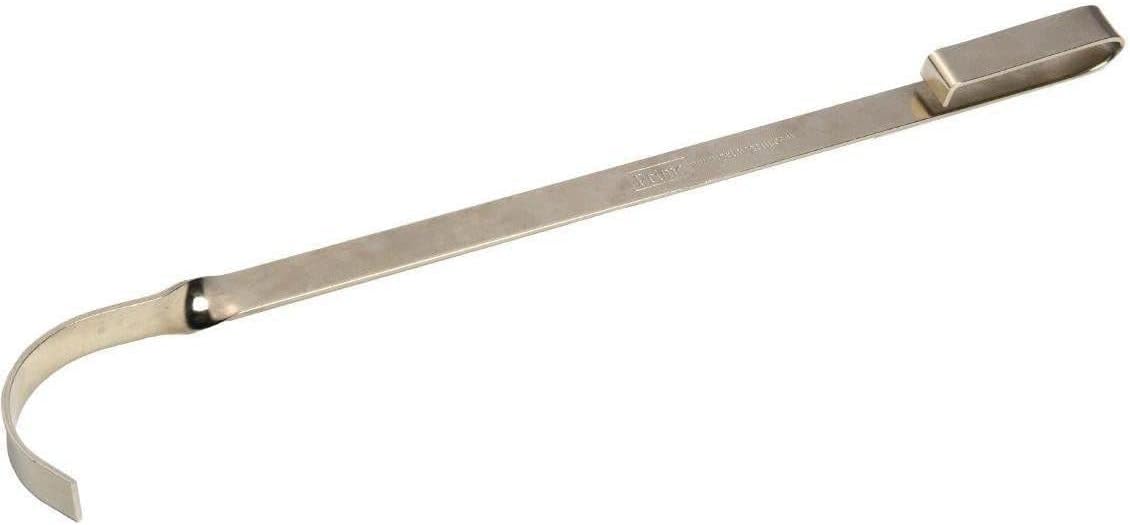 Visit on Amazon → Visit on Amazon →Primo Large Round Ceramic Kamado Grill |
Large round ceramic cooks | The cooker itself | One even zone, add a deflector for indirect, check the firebox warranty |
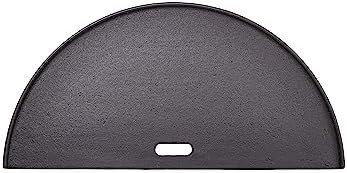 Visit on Amazon → Visit on Amazon →Kamado Joe Half-Moon Cast Iron Reversible Flat-Top Griddle |
Half moon grate systems | Searing, smash burgers, breakfast | Smooth side and ribbed side, season it, keep it dry |
 Visit on Amazon → Visit on Amazon →Rolling Cart Rolling Nest for Large Kamado Grills |
Large kamado grills | Moves the cooker, stores fuel | Powder coated, want locking casters, flat ground only |
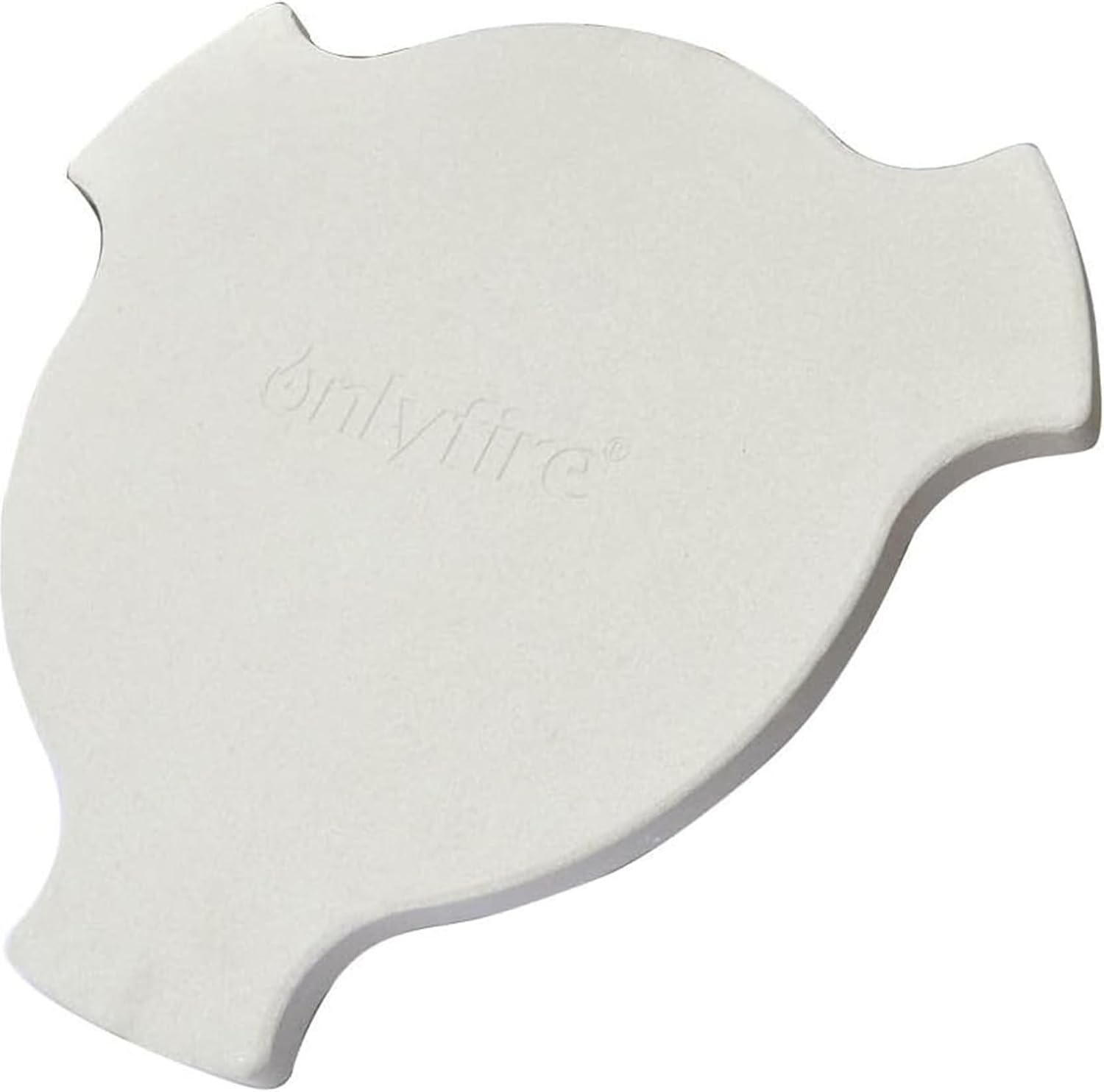 Visit on Amazon → Visit on Amazon →Onlyfire 18" Pizza Stone Heat Deflector |
Big Green Egg and other kamados | Pizza and indirect barrier | Preheat with the cooker, keep it dry, no cold stone into a hot dome |
Read the table top to bottom and you have a working setup. Cooker, indirect capability, a searing surface, and a way to move the thing without wrecking your back. That is the whole kit. Anything past this is optional, and I say that as a man with a drawer full of optional.
How I set up a kamado before anything touches the grate
Order of operations matters more than gear. Light the lump, let it come up slowly, and stabilize the dome at your target before you even think about the meat. A kamado needs a heat soak, and skipping it is how briskets get ruined. The ceramic has to come up to temperature as a mass, not just the air inside it. If you put a cold packer on a cooker that has been at 250 for ten minutes, you are going to chase temperature all night.
Learn the vents before you buy a controller. Top vent and bottom vent together are ninety percent of kamado cooking, and a controller cannot save you if you do not understand what your cooker does when the wind picks up. Controllers are worth it for overnight cooks, and I use one, but the people who struggle with them are the people who never learned the vents first.
Do not trust the dome thermometer for anything except a rough idea. It reads the air at the top of the cooker, not the heat at the grate. If you want to know what your meat is actually sitting in, use a probe at grate level. That is the number that matters.
And check your gasket every spring. A gasket that has started to peel is the beginning of every temperature problem you are about to have. If the lid does not seal, the cooker leaks, and a leaking kamado runs hot and eats fuel.
Should you buy the Primo Large Round Ceramic Kamado Grill?
Yes, if you want one ceramic cooker that will run low and slow and also sear a steak. The round shape gives you one even cooking zone, and that is a feature, not a compromise. Buy a heat deflector at the same time, because a round cooker with fire straight under the grate is a direct heat machine. Ask about the firebox and gasket warranty before the cooker leaves the store. Those are the two parts that fail first on any kamado, and the warranty is what decides whether that is an inconvenience or a disaster.
Should you buy the Kamado Joe half-moon cast iron griddle?
Yes, if your cooker uses a half moon grate system. The smooth side handles smash burgers, eggs, and searing. The ribbed side gives you grill marks and lets fat run off. Cast iron inside a kamado is a radiant heat surface, so it holds temperature beautifully. Season it, keep it dry, and never leave it sitting in a damp cooker overnight. If your grate is a full round with no split, this is not your accessory.
Should you buy the rolling cart for a large kamado?
Yes, and buy it before you hurt your back. A large ceramic cooker is not a one person lift, and dragging one across a deck is how fireboxes and gaskets get ruined. Get locking casters. Keep it on flat ground. Never roll a cooker that is still hot, no matter how good the casters are.
Should you buy the Onlyfire 18" pizza stone heat deflector?
Yes, because it does two jobs. Set it under the grate and it becomes your indirect barrier for low and slow. Raise it to grate level and it is a pizza stone for a 550 to 600 degree cook. Preheat it with the cooker, keep it dry, and never drop a cold stone into a hot dome. One piece of gear, two of the four things a kamado needs to be a real barbecue cooker.