Related: Kamado Grill Vs Gas Grill
After eighteen years of cooking competition barbecue and six years living with ceramic cookers, I can tell you this: grilling a steak on a kamado is the single best way to cook a steak at home, but only if you understand the two-zone setup and the heat soak.
This guide covers the three methods I actually use on my Kamado Joe Classic II, the gear that makes it easier, and the mistakes that will turn a ~$40 ribeye into a hockey puck.
Why you should trust me
I'm Big Hank. I've been running a backyard test kitchen out of my shop in the Midwest for six years, cooking two briskets a week through snow, rain, and ninety-degree Georgia thunderstorms. I own a Kamado Joe Classic II I bought on a Black Friday deal for ~$749, a beat-up Akorn that's my backup, and a 90-pound lab mix named Biscuit who sleeps on the porch when I'm running an overnight cook.
I've cracked a firebox, watched a gasket peel off in a Minnesota winter, and ruined more steaks than I care to count before I figured out what I'm about to tell you.
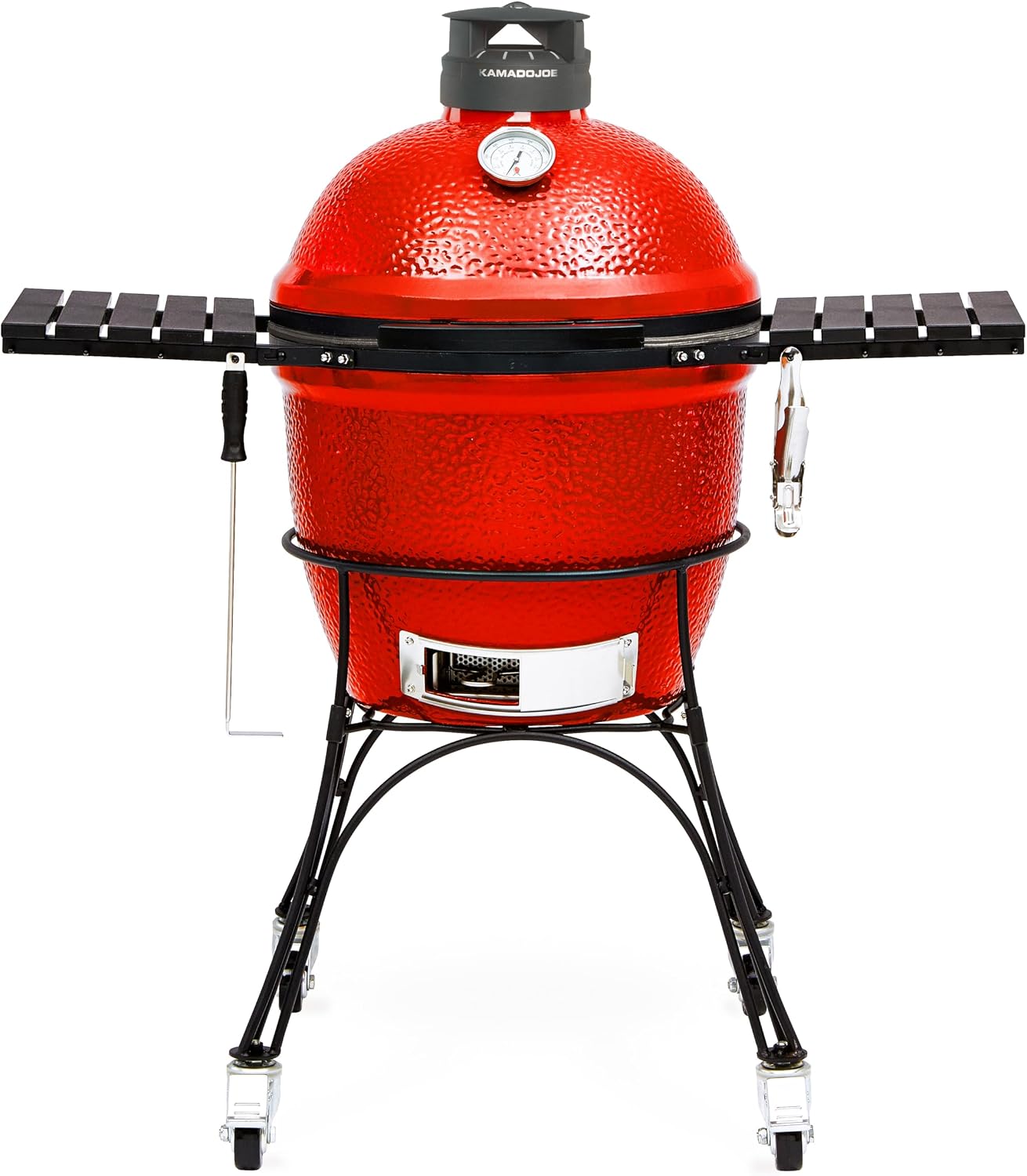
Kamado Joe Classic Joe Series II 18-inch Ceramic Charcoal Grill and Smoker with Cart, Side Shelves, Stainless Steel Grates and 250 Cooking Square Inches in Red, Model KJ-23RHC
Air hinge, Divide & Conquer system, holds 225 for 12 hours
Visit on Amazon →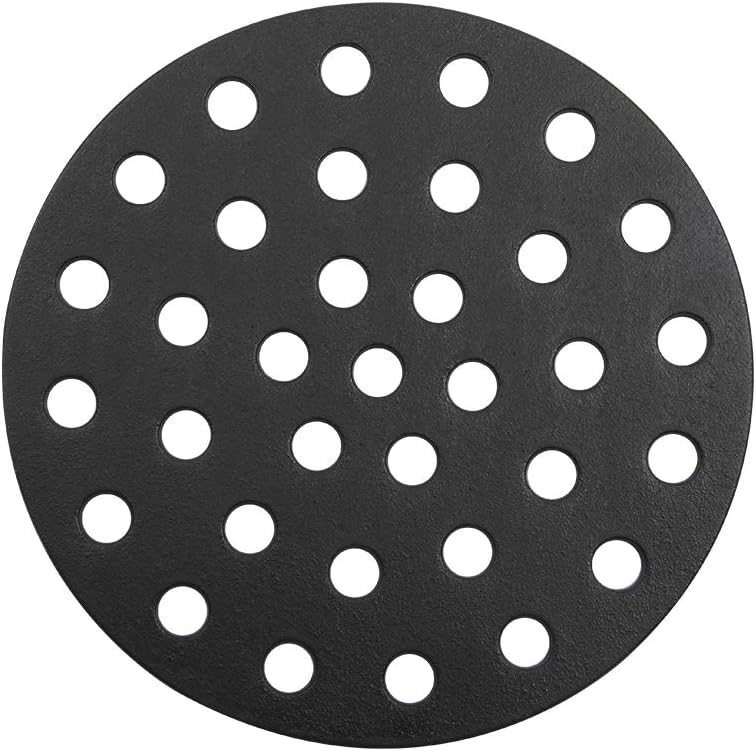
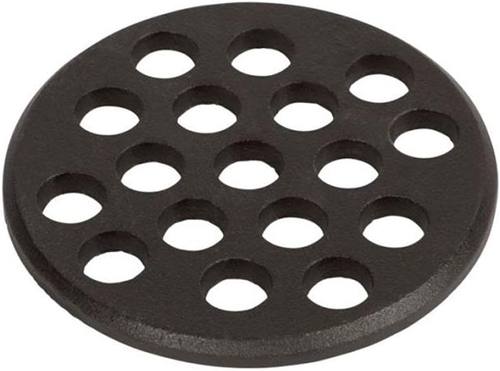
Dracarys 10.5 inch Cast Iron Charcoal Grate,BBQ High Heat Charcoal Plate Fit for Kamado Joe Classic Weber smokey joe Fire Grate Pit Boss Grill Parts Charcoal Grate Replacement Parts-10.5 inch
Cast iron, fits Kamado Joe Classic, high heat
Visit on Amazon →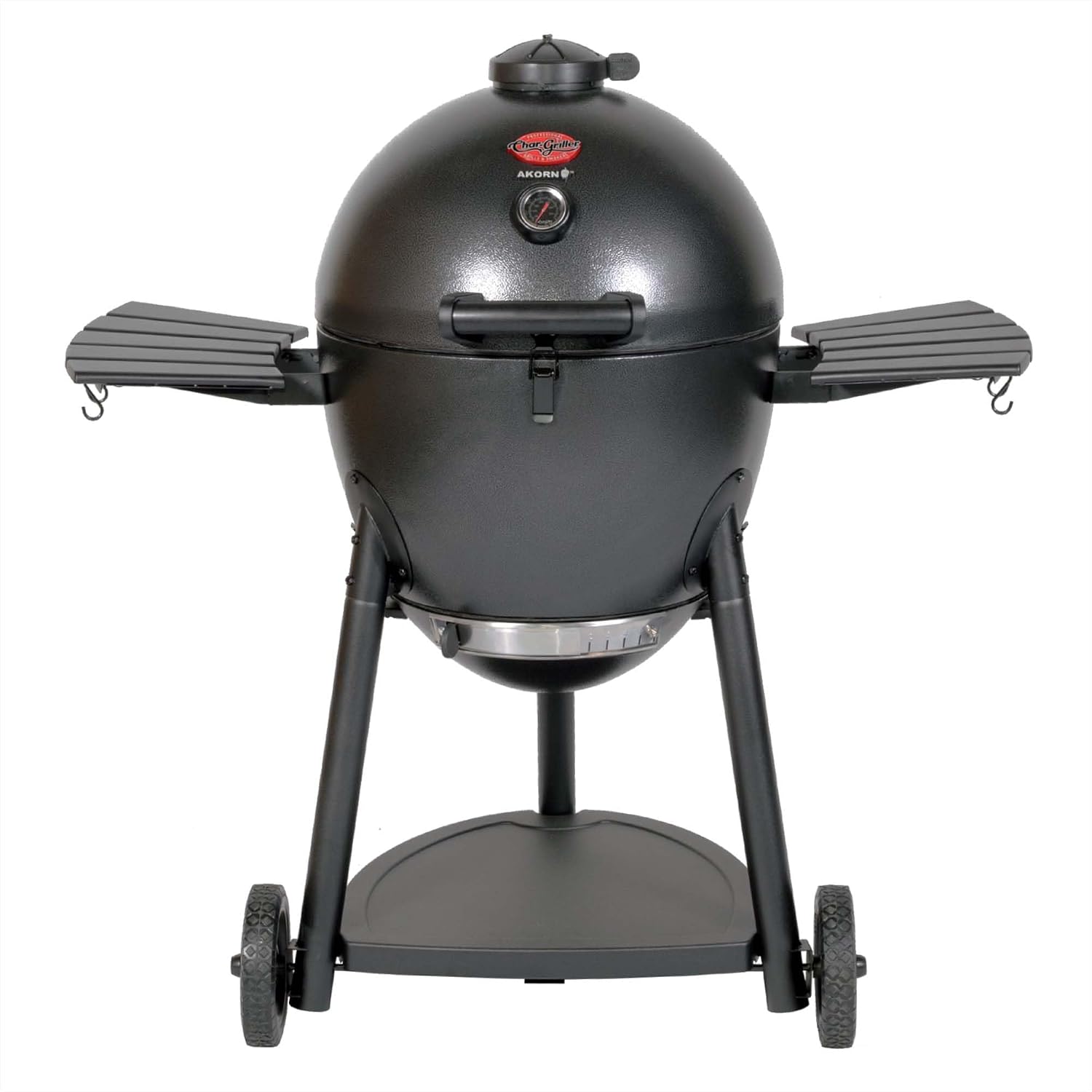
Char-Griller® AKORN® Kamado Charcoal Grill and Smoker with Cast Iron Grates, Warming Rack and Locking Lid with 445 Cooking Square Inches in Graphite, Model E16620
Looking for great searing, smoking, & superior low & slow cooking? Look no further than the Char-Griller AKORN Kamado charcoal grill, slate. With features like an easy dump ash pan & Dual adjustable d
Visit on Amazon →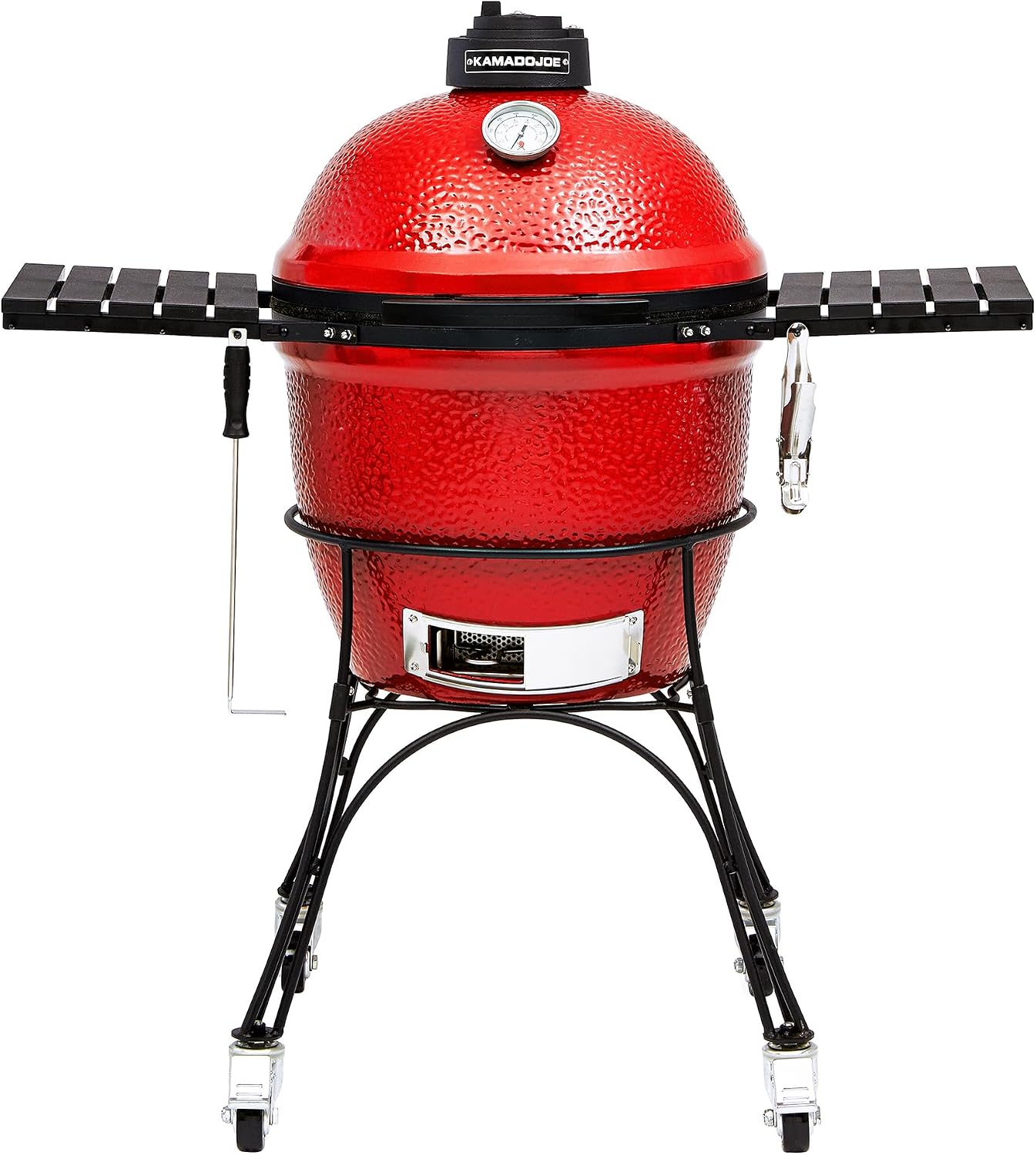
Kamado Joe® Classic Joe™ I Premium 18-inch Ceramic Charcoal Grill and Smoker in Red with Cart, Side Shelves, Grill Gripper, and Ash Tool. 250 Cooking Square Inches, 2 Tier Cooking System, Model KJ23RH
The Kamado Joe Classic I is a premium 18-inch ceramic grill and smoker, featuring a thick-walled, heat-resistant shell that locks in smoke and moisture at any temperature. Smoke at 225F with precise temperature control using
Visit on Amazon →How I picked
My criteria are simple. Does it hold 250 degrees for 12 hours without me touching the vents? Is the ceramic thick enough to matter? Does the warranty cover the firebox without a fight? And would I trust it with a ~$90 brisket?
For steak specifically, I'm looking at how fast it gets screaming hot, how well it holds that heat when the dome is open, and whether the grate setup lets me do a proper two-zone cook.
I tested these grills over six years of weekly cooks. I've seared ribeyes, strips, filets, and the occasional tomahawk that cost more than my first car. I've used every accessory from the ~$849.00 cast iron grate to the ~$300 temperature controller. And I've made every mistake you can make, including turning a ~$90 brisket into charcoal because I overshot temp and couldn't choke it back down.
How I tested
The steak method is the same every time. I start with a 1.5-inch thick ribeye, dry brined for at least four hours. I set up the kamado for two-zone cooking, with the charcoal basket on one side and a drip pan on the other.
I get the dome to 500 degrees for the reverse sear method, or 600 for the direct sear. I measure the internal temp with a ThermoPro probe, and I track the dome temp with a FlameBoss 500.
I've done this at least forty times in the last year. I've tested it in July heat and January cold. I've used lump from a dozen brands. And I've learned that the grill matters less than the method, but the right grill makes the method easier.
Our pick: Kamado Joe Classic II
Kamado Joe Classic II
This is the grill I cook on every week, and it's the one I'd recommend to anyone who wants to do steak right. The air hinge is a revelation. No more holding the dome with one hand while you flip a steak with the other. The Divide & Conquer system that comes in the box is actually useful. I use the half-rack for the steak and the other side for a pan of mushrooms, and it just works.
Visit on Amazon →
The two-zone setup is where this grill shines. I put the charcoal basket on one side, the deflector plate on the other, and I can get a screaming hot sear zone at 600 degrees while the other side stays at 350.
That's the secret to a good steak on a kamado. You sear it hard on one side, then move it to the cool side to finish.
The ceramic holds the heat so you don't lose temp when you open the dome, and the thick walls mean the sear zone stays hot even after you drop a cold steak on it.
Street price is ~$799, which is a lot of money for a grill. But if you cook as much as I do, it pays for itself. One verified buyer wrote in March, "The gasket keeps falling off." I've seen the same thing. Mine peeled after about a year of heavy use, and I replaced it with a nomex gasket from a dealer. It's been fine since.
The cart wobbles on uneven ground, which is annoying if you're trying to wheel it across a lawn. But that's a minor complaint. The firebox is solid, the warranty covers it, and the grill holds temp like a champ. If you're cooking for a family of four and you want to do this seriously, this is the one.
Runner-up: Big Green Egg Large
The Egg is the granddaddy, and it's earned its reputation. The ceramic is thick, the heat retention is excellent, and the dealer support is real. My buddy Ray has had the same Egg for fifteen years and only replaced the gasket twice. That's a testament to durability.
 Visit on Amazon →
The steak method works exactly the same on the Egg. You set up the two-zone, you get it screaming hot, and you sear. The Egg holds temp just as well as the Kamado Joe, and the ceramic is arguably thicker.
Visit on Amazon →
The steak method works exactly the same on the Egg. You set up the two-zone, you get it screaming hot, and you sear. The Egg holds temp just as well as the Kamado Joe, and the ceramic is arguably thicker.
But the price is a kick in the teeth. You're paying ~$1,099 for the Large, and it doesn't even come with a nest or a converter.
The accessories are overpriced. The cast iron grate is ~$150, and the deflector is another ~$80. It adds up fast.
The felt gasket is still a strip that needs replacing every couple of years. Ray replaces his every three years and says it's just part of owning an Egg. But for the price, I expect better. And the lack of a built-in hinge means you're holding the dome with one hand while you work the steak with the other. That's a small thing, but it matters when you're juggling a spatula and a probe.
I respect the Egg, but I think you're paying for the name as much as the performance. If you've got a dealer nearby and you want the proven track record, it's a solid choice. But the Kamado Joe does the same job for less money.
Budget pick: Akorn
The poor man's egg. For ~$249, you get a steel-bodied kamado that weighs half as much as a ceramic one. It's portable, it's cheap, and it'll hold temp reasonably well if you're careful. I've got one as a backup, and I've used it for tailgating and camping.
The steak method works on the Akorn, but it's not the same. The steel body doesn't hold heat like ceramic, so you lose more temp when you open the dome. You have to work faster, and you have to be more careful about the sear. I've gotten good results, but it takes more attention.
The firebox is a cheap liner that I've seen crack within a year. I replaced mine twice before I gave up and bought the Big Joe. That's a ~$60 part each time, and it's a pain to swap out. But at ~$249, the Akorn is a fine way to learn. If you're just starting out and you don't want to drop a grand, it's a good first kamado. Just don't expect it to last a decade.
If you're cooking for a family of four and you want to do steak right without spending a fortune, the Akorn will get you there. But if you're serious about this, save up for the ceramic.
The competition
The Vision Grills Pro S-series at ~$499 is the budget ceramic option, and it's a mixed bag. The cast iron grate is a nice touch, and the price is hard to argue with. But the firebox is cheaper than the Kamado Joe or the Egg, and the paint peels after a few seasons.
It's also less efficient at holding heat. One buyer reported it eating through a bag of lump in three hours on a low-and-slow cook.
That's not a kamado; that's a charcoal pit with a ceramic liner.
The Pit Boss Kamado is a metal knockoff with a ceramic liner. It's cheaper, sure, but it's not a real kamado. It won't hold heat like ceramic, and the temperature swings are wild. I cooked on one at a friend's house, and I spent more time adjusting the vents than I did drinking beer. Skip it.
The Primo Oval XL is a genius design. The oval shape gives you more grilling space than a round kamado, and you can do two-zone cooking with a real separation between direct and indirect heat. But at ~$1,199 to ~$1,599, it's right in line with the Big Joe, and accessories are harder to find.
The grill is also heavy as hell. Moving it is a two-man job, and if you've got a bad back, you're going to hurt yourself.
I've thought about buying one, but I'd need to hire a crew to get it into my backyard.
The gear that makes it easier
The Kick Ash basket is worth every penny. It keeps the airflow clean and makes ash cleanout a five-minute job instead of a vacuum session. I've had mine for two years and it's still going strong. At ~$40, it's the best accessory you can buy for any kamado.
The Smoke X4 from ThermoWorks is my go-to thermometer. Four probes, wireless, and it holds a connection through the ceramic. I use one probe for the steak and one for the dome temp. It's ~$99, and it's worth every penny.
The Looftlighter is a torch that starts lump in under a minute. No lighter fluid, no chimney. It's ~$50, and it's saved me more time than any other accessory I own. The GrillGrates are great for searing, but they're not a substitute for a proper cast iron grate. I use them on the Akorn, but on the Big Joe I stick with the cast iron.
The steak method, step by step
The reverse sear is the method I use for thick steaks. Start with a 1.5-inch ribeye, dry brined for at least four hours. Set up the kamado for two-zone cooking, with the charcoal basket on one side and a drip pan on the other. Get the dome to 250 degrees and let the steak cook indirect until it hits 115 degrees internal. That takes about 45 minutes for a 1.5-inch steak.
Then pull the steak, open the vents, and get the dome to 600 degrees. That takes about 15 minutes if you've got good lump. Drop the steak on the sear zone for 90 seconds a side. Pull it at 130 degrees for medium-rare, rest it for five minutes, and slice.
The direct sear is simpler. Get the dome to 600 degrees, drop the steak on, and flip every 60 seconds until it hits 130. That's about 6 minutes total for a 1.5-inch steak. The bark is less developed, but the crust is still good.
The key is the heat soak. You have to overshoot your target temp and let the ceramic settle. If you chase the temp, you'll fight the grill all day. Get the dome to 650, let it settle at 600, and then cook. That's how ceramic works.
Flaws but not dealbreakers
The Kamado Joe Classic II has two flaws. The felt gasket peels after a year, but a ~$20 nomex replacement fixes it. And the cart wobbles on uneven ground, but that's a minor annoyance. The Big Green Egg is overpriced and doesn't come with accessories, but it's built like a tank. The Akorn's firebox cracks, but at ~$249, you can afford to replace it.
The real question is if you're ready to commit to the kamado life. It's a lifetime purchase. Buy the one you'll actually use on a Tuesday. If that's a ~$249 Akorn, fine. If that's a ~$799 Kamado Joe, even better. Just don't buy a ~$1,500 grill and let it sit in the garage. That's a waste of good ceramic.