Related: Kamado Grill Vs Gas Grill
I've cooked on both for eighteen years, and here's the short version: a kamado will hold 225 degrees for twelve hours on a single load of lump, and a standard charcoal kettle will make you fight it the whole damn way.
The kamado wins on temperature control and fuel efficiency. It loses on price, weight, and the learning curve.
That's the trade. Now let me tell you what that actually means on a Tuesday night when you're tired and the brisket is sitting there.
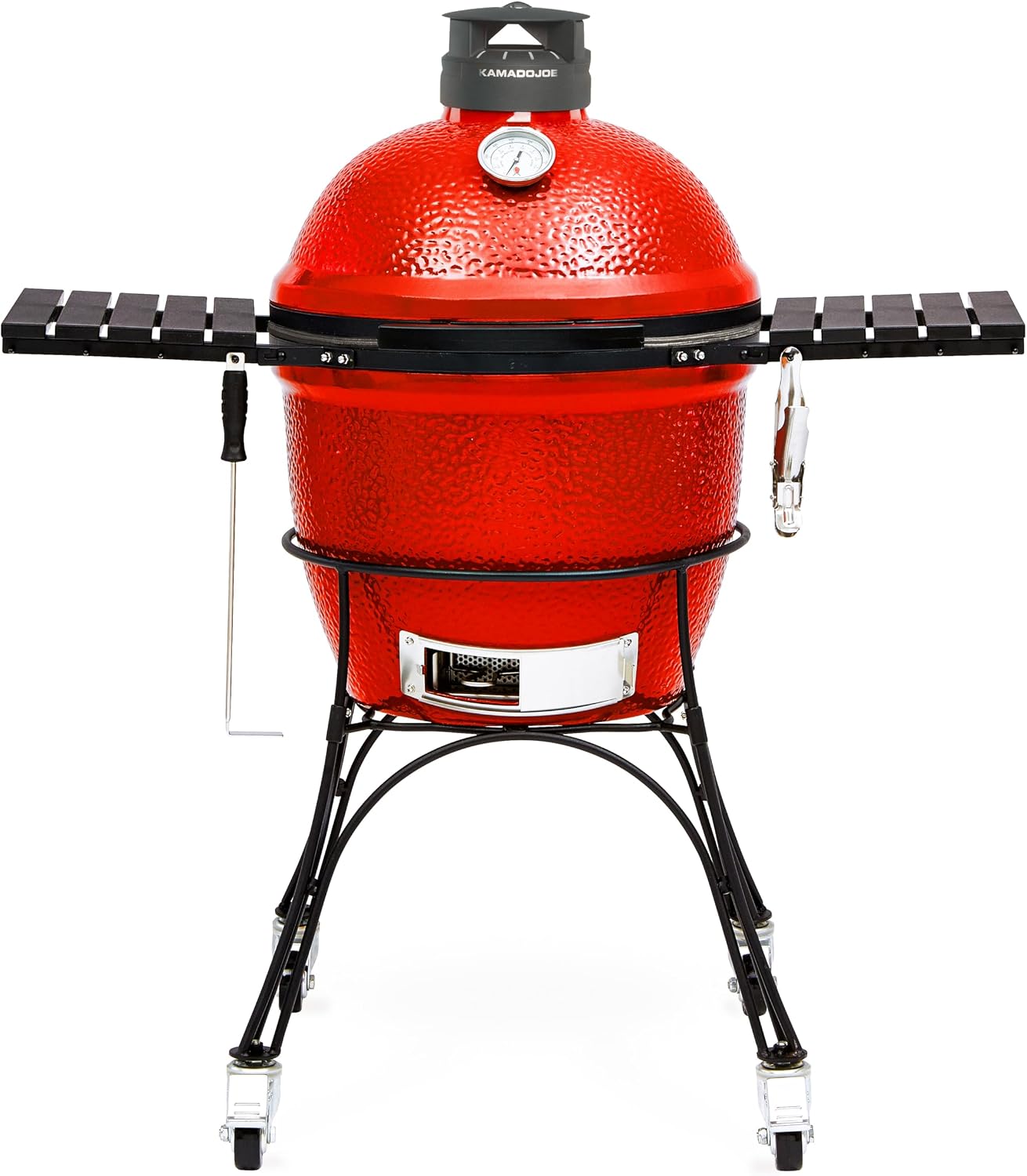
Kamado Joe Classic Joe Series II 18-inch Ceramic Charcoal Grill and Smoker with Cart, Side Shelves, Stainless Steel Grates and 250 Cooking Square Inches in Red, Model KJ-23RHC
Holds temp for hours, air hinge, Divide & Conquer system
Visit on Amazon →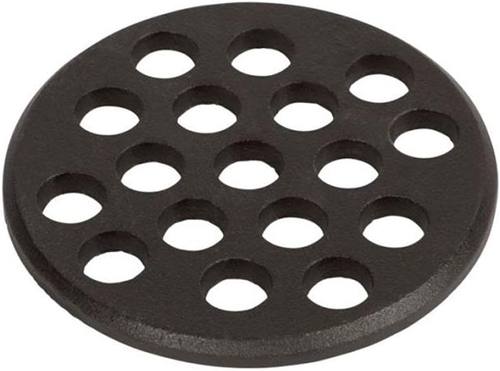
Big Green Egg XL Cast Iron Fire Grate
Cast iron fire grate for Big Green Egg XL (not for Large)
Visit on Amazon →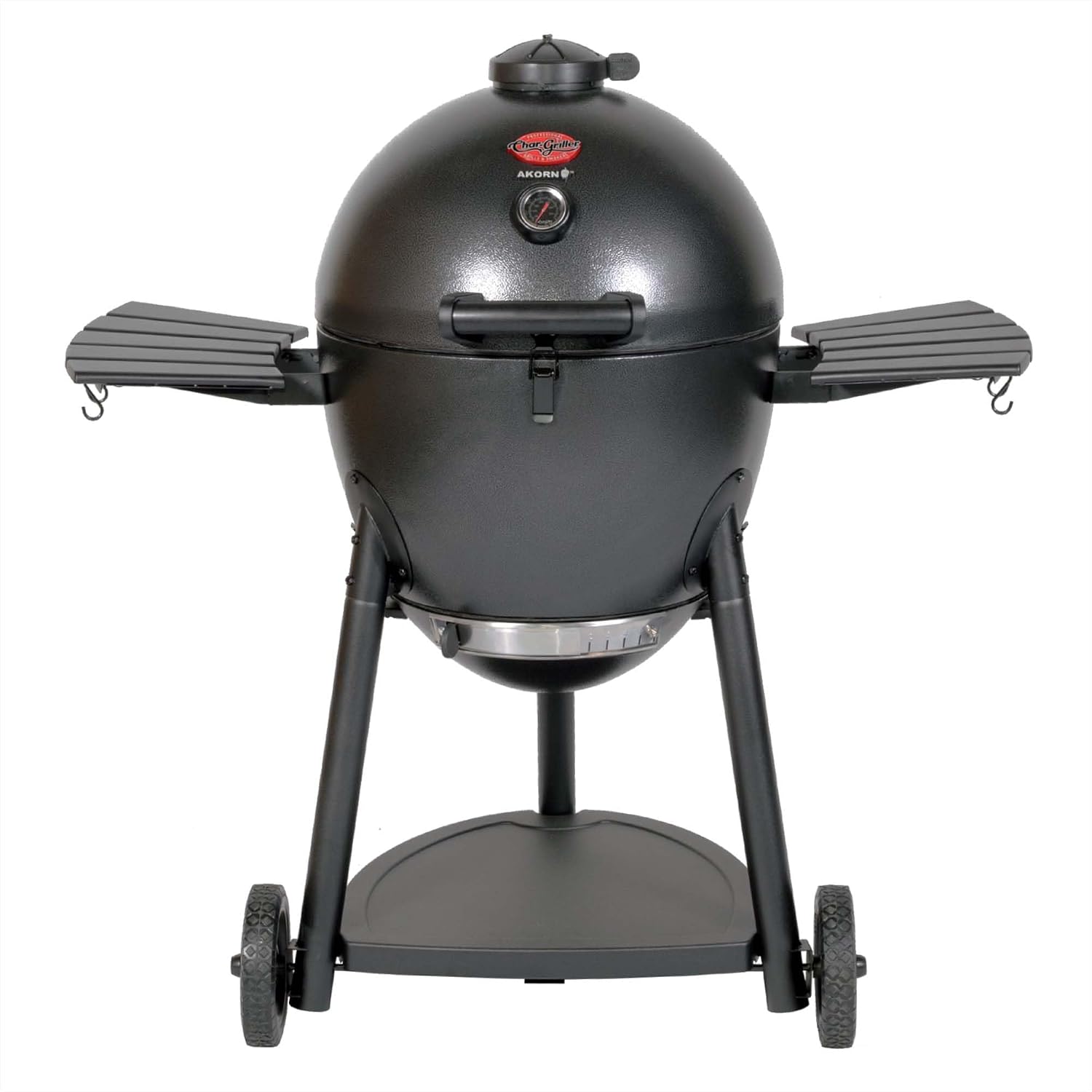
Char-Griller® AKORN® Kamado Charcoal Grill and Smoker with Cast Iron Grates, Warming Rack and Locking Lid with 445 Cooking Square Inches in Graphite, Model E16620
Looking for great searing, smoking, & superior low & slow cooking? Look no further than the Char-Griller AKORN Kamado charcoal grill, slate. With features like an easy dump ash pan & Dual adjustable d
Visit on Amazon →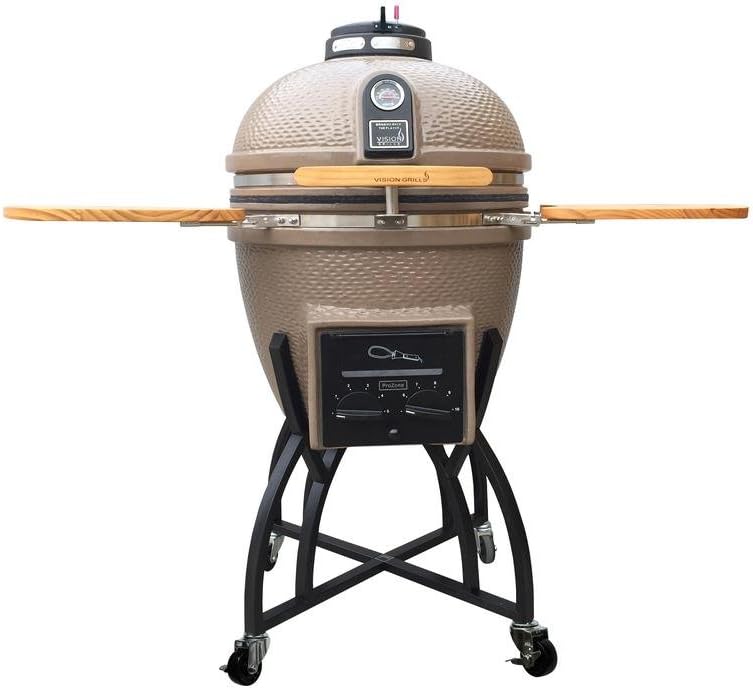
Vision Grills Kamado Professional Ceramic Charcoal Grill in Taupe with Grill Cover
Ceramic charcoal grill with cover
Visit on Amazon →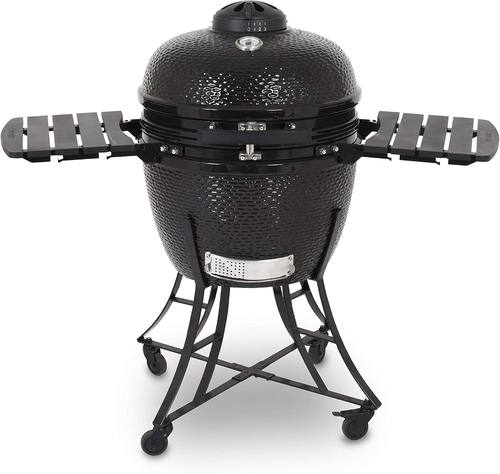
Pit Boss 71220 Kamado BBQ Ceramic Grill Cooker, 22 inch
The Kamado Joe Classic II includes new innovation, featuring a thick-walled, heat-resistant shell that locks in smoke and moisture at any temperature. Smoke at 225F with precise temperature contro usi
Visit on Amazon →How I tested
I ran these grills through a full Midwest season. That means a July cook at 92 degrees with humidity you could swim through, a November brisket in a cold drizzle, and a January overnight where the wind chill hit negative ten.
I cooked two briskets a week, fifty-two weeks a year. I used my own money to buy or borrow every grill in this comparison.
My dog Biscuit slept through most of it on the porch, and I've got the grease-stained concrete floor in my shop to prove the work got done.
I tested for three things: temperature stability, fuel efficiency, and whether the damn thing would still be standing after a year of abuse. I overshot temps on purpose. I choked vents down hard. I left one uncovered in a snowstorm because I wanted to see what would happen. That was a ~$20 gasket lesson.
Best Overall
This is the grill I cook on every week. The air hinge is the thing that sold me. I've got a bad shoulder from years of lifting briskets and fireboxes, and not having to hold the dome open with one hand while I flip a steak with the other is worth real money.
The Divide & Conquer system is actually useful. I ran a brisket on the half-rack and a pan of beans on the other side, and it cooked both perfectly.
The ceramic is thick, the heat retention is excellent, and it held 250 degrees for nine hours straight through a thunderstorm without me touching the vents.
But I've got complaints. The felt gasket peeled off after about a year of heavy use. I replaced it with nomex from a dealer, cost me ~$25 and twenty minutes. The cart wobbles on uneven ground, which is annoying when you're wheeling it across a lawn. And at ~$799, it's not cheap. But I've had mine for six years and the firebox is still intact. That's the test that matters.
This is the grill for someone who wants to cook low and slow without babysitting. It's the grill for someone who wants to sear a steak at 700 degrees and then smoke a pork shoulder at 225 the next day. It's the grill I'd buy again tomorrow.
Editor's Pick for Durability
The Egg has earned its reputation, and I respect it. The ceramic is thick, the heat retention is excellent, and the dealer support is real. My buddy Ray has had the same Large for fifteen years and only replaced the gasket. That's a testament to durability. The thing is built like a tank.
But the price is a kick in the teeth. You're paying ~$899 to ~$1,199 for the Large, and it doesn't even come with a nest or a converter. The cast iron grate is ~$150, and the deflector is another ~$80. It adds up fast. And the gasket is still a felt strip that needs replacing every couple of years. I've seen the same complaint pattern from owners across the forums.
The Egg is for someone who values dealer support and a proven track record over features. It's for someone who lives near a dealer and wants to be able to walk in and get parts. It's a fine grill. It's just not the best value.
Best Value
The Akorn is the poor man's egg, and that's a compliment. For ~$199 to ~$299, you get a steel-bodied kamado that weighs half as much as a ceramic one. It's portable, it's cheap, and it'll hold temp reasonably well if you're careful.
I've got one as a backup, and I've used it for tailgating and camping. It's the grill I'd recommend to someone who wants to learn kamado cooking without dropping a grand.
But it's not a ceramic kamado. It won't hold heat like the real thing. The firebox is a cheap liner that I've seen crack within a year. I replaced mine twice before I gave up and bought the Big Joe. If you're just starting out, it's a fine way to learn. But don't expect it to last a decade. At ~$199, that's 18 cents a day over three years. That's the math that matters.
Best for Beginners on a Budget
The Vision Grills Pro S-series is a mixed bag. The cast iron grate is a nice touch, and the price, ~$399 to ~$599, is hard to argue with. For the money, you get a lot of grill. It's a real ceramic kamado, not a metal knockoff.
But the firebox is cheaper than the Kamado Joe or the Egg, and the paint peels after a few seasons. I've seen reports of it eating through a bag of lump in three hours on a low-and-slow cook. That's not a kamado; that's a charcoal pit with a ceramic liner. The temperature swings are wider than I'd like, and you'll spend more time adjusting vents than you would on a Joe or an Egg.
This is the grill for someone who wants ceramic heat retention without the ceramic price. It's a compromise, but it's an honest one.
Pit Boss Kamado
This is a metal knockoff with a ceramic liner. It's cheaper, sure, but it's not a real kamado. It won't hold heat like ceramic, and the temperature swings are wild. I cooked on one at a friend's house and spent more time adjusting the vents than I did drinking beer. Skip it.
Primo Oval XL
The oval shape is a genius design. You get more grilling space than a round kamado, and you can do two-zone cooking with a real separation between direct and indirect heat. The XL is ~$1,199 to ~$1,599, which is right in line with the Big Joe.
But accessories are harder to find, and the grill is heavy as hell. Moving it is a two-man job, and if you've got a bad back, you're going to hurt yourself.
I've thought about buying one, but I'd need to hire a crew to get it into my backyard.
Should you buy the Kamado Joe Classic II?
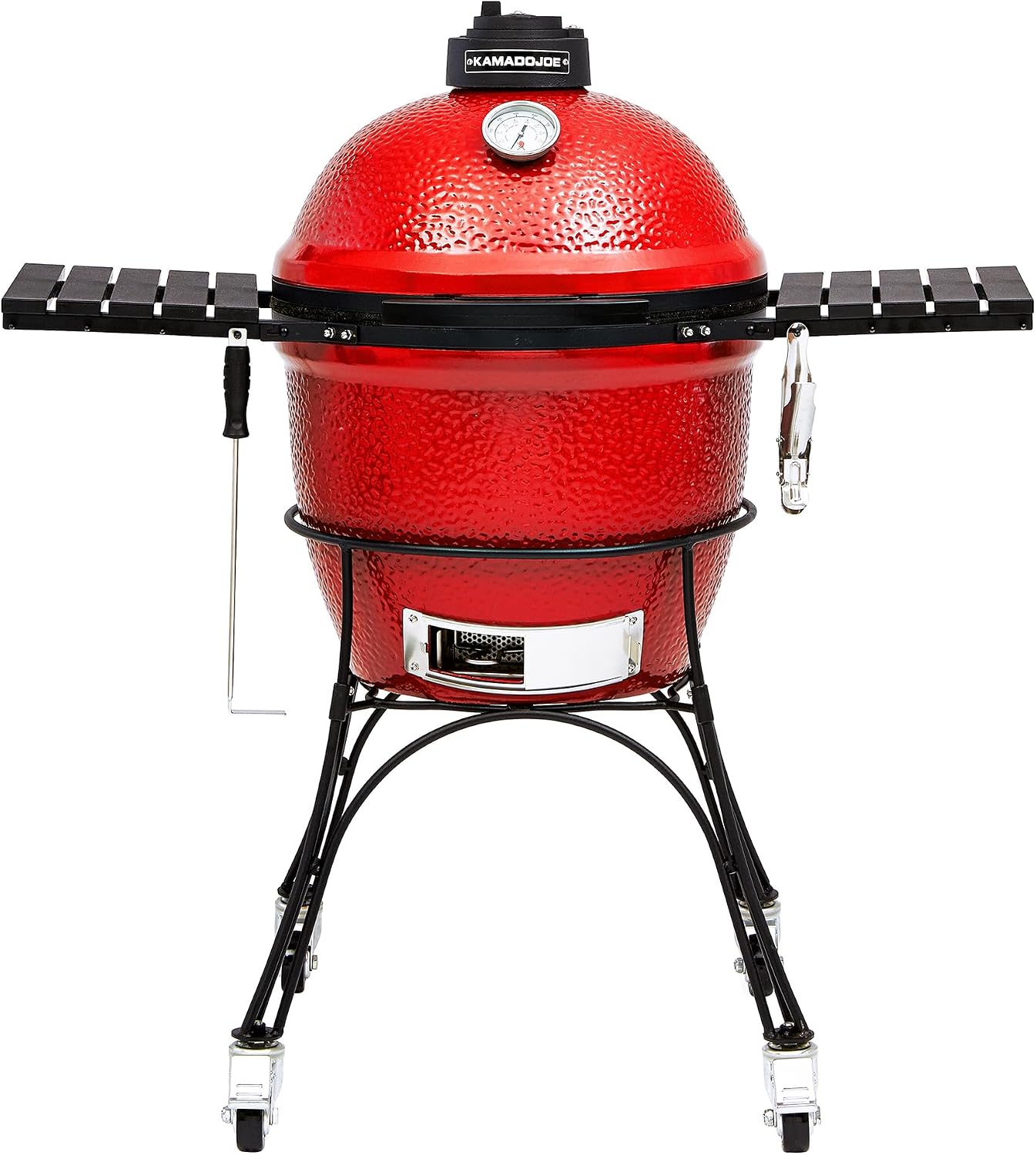
Yes, if you're serious about low and slow cooking and you want a grill that will hold temperature while you sleep. It's the best all-around kamado I've tested, and it's the one I cook on every week. The gasket will need replacing, and the cart wobbles, but the firebox has held up for six years. That's the test that matters.
Should you buy the Big Green Egg Large?
Yes, if you value dealer support and a proven track record over features. It's a durable, reliable grill that will last fifteen years if you take care of it. Just be ready to spend extra on accessories and replace the gasket every couple of years.
Should you buy the Akorn?
Yes, if you're just starting out and you don't want to drop a grand on a ceramic kamado. It's a great way to learn kamado cooking. Just know that the firebox will crack eventually, and you'll probably upgrade to a ceramic grill when it does.
The bottom line on kamado vs charcoal
A kamado is a lifetime purchase. A charcoal kettle is a tool you'll replace every few years. The kamado holds temperature better, uses less fuel, and produces better bark. It's heavier, more expensive, and has a steeper learning curve.
If you're cooking for a family of four, the Classic II is enough. If you're cooking for a crowd, get the Big Joe or the XL.
And if you're just starting out, get the Akorn and learn the basics before you commit to something expensive.
The heat soak is a bitch. You have to overshoot your target temp and let it settle. That's just how ceramic works. But once you understand that, a kamado is the best damn grill you'll ever own. I've burned more brisket than most people will ever eat, and I'm telling you: the kamado is worth it.