A kamado has one job at dinner time: move heat where the food needs it and keep it there. My standard test is simple. Can the setup hold 250°F for 12 hours through wind, cold, and a vent tweak from a sleepy cook? Direct versus indirect heat decides whether you get clean bark, a decent smoke ring, or a burnt edge that tastes like an ashtray.
The best overall setup is the Kamado Joe Classic II with the Divide & Conquer half-rack configuration. It costs about $799, but the included rack system makes the extra cost easier to justify. The Akorn is the best value at roughly $199 to $299, though its steel body and replaceable firebox make it a poor long-term investment for a serious cook.
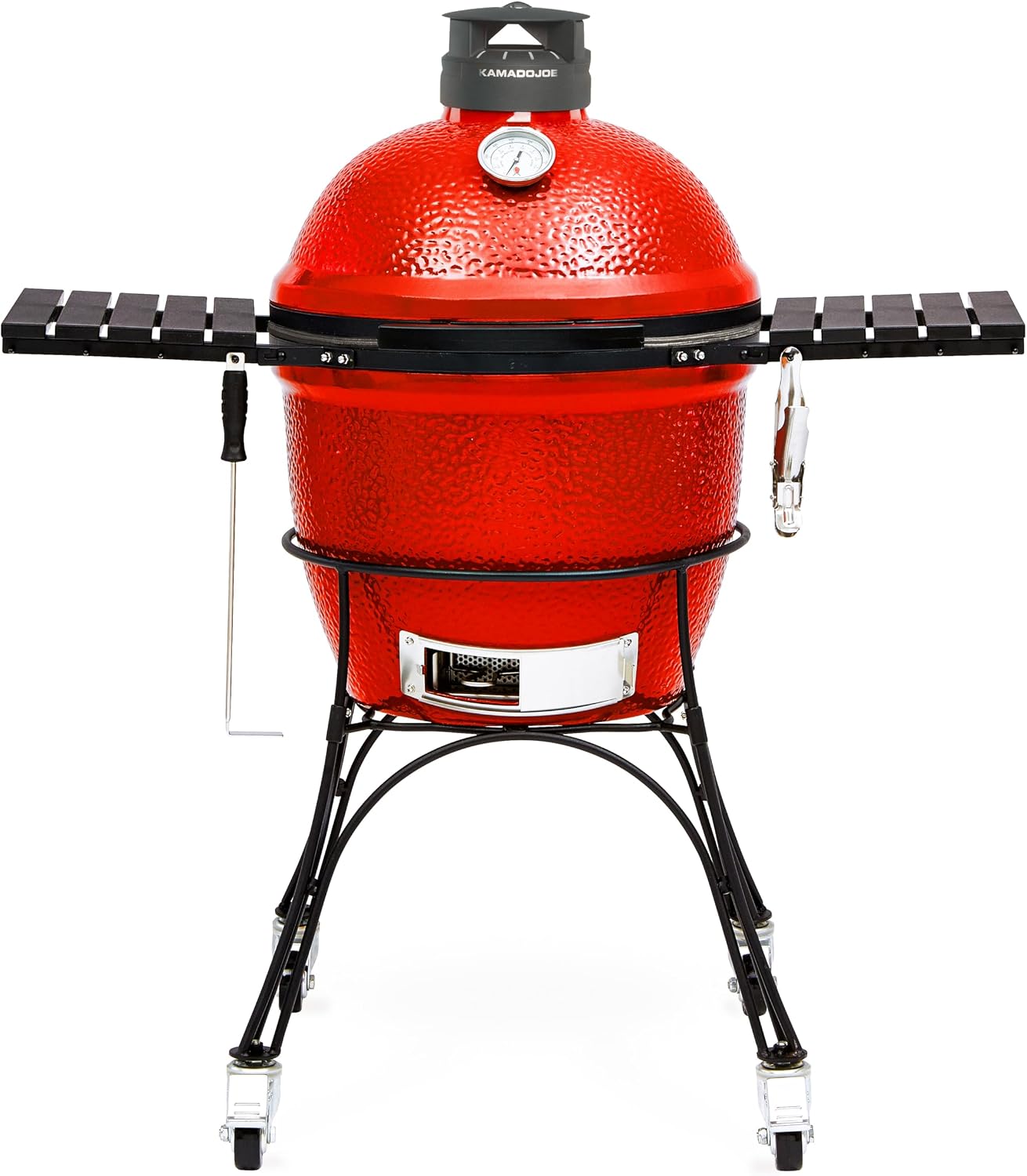
Kamado Joe Classic II
Best overall balance of airflow, included rack system, and stable temperature control
Cart wobbles; original felt gasket can peel; expensive
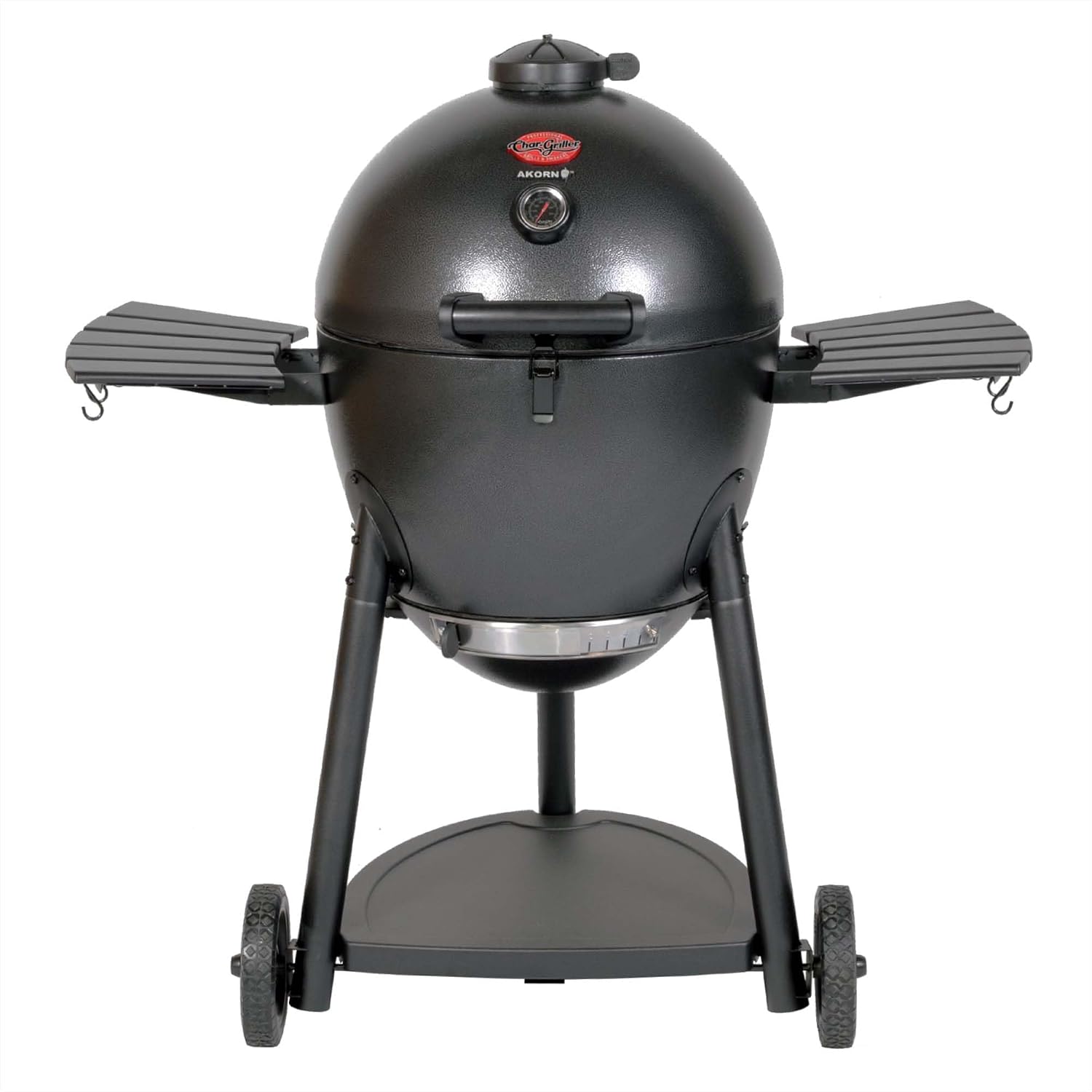
Akorn
Best value and easiest way to learn two-zone cooking
Steel loses heat faster; firebox liner can crack; not a true ceramic kamado
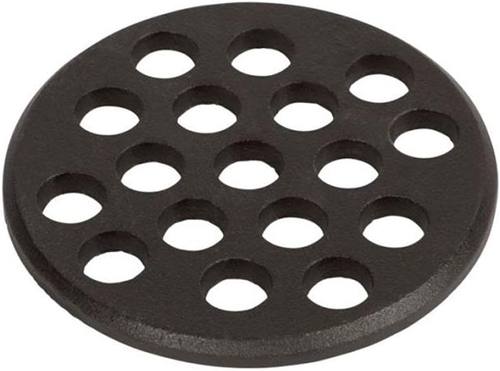
Big Green Egg Large
Excellent heat retention and strong dealer support
Accessories add up fast; no nest or heat deflector included
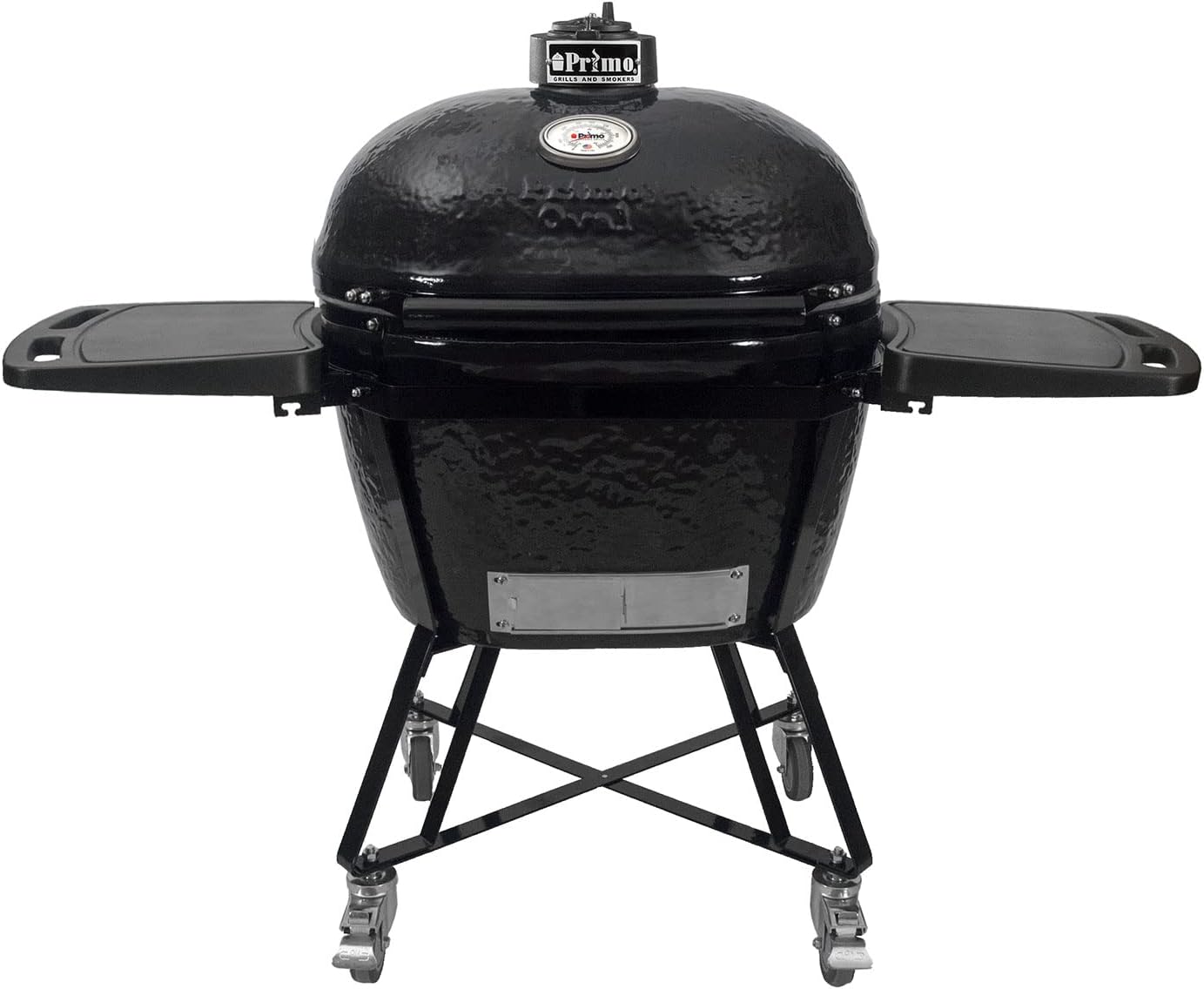
Primo Oval XL
Best direct and indirect separation because of its oval shape
Heavy, awkward to move, and expensive
Prices and availability were captured from Amazon Creators API and may change.
How I tested direct and indirect heat
I tested these setups in my backyard shop through a Midwest winter and a few hot, humid afternoons. I used lump charcoal, not briquettes. Briquettes belong in a kettle. I ran 2-zone cooks with a 10-inch cast iron pan on the cool side, a full rack of chicken thighs, and a digital thermometer probe placed beside the food rather than touching the pan.
For the slow test, I lit a small pile of lump, left the dome open for 10 minutes, then closed it and watched the temperature climb. Ceramic needs heat soak. I let each grill overshoot 250°F by roughly 20°F before choking the bottom vent down. That overshoot is normal. If you chase the number and close the vents too early, the ceramic keeps climbing after the vents are closed.
I also cooked at 350°F for 90 minutes to see how quickly the setups recovered after opening the dome. I opened each grill 4 times, added no charcoal, and recorded the recovery time. I cleaned the ash and checked the gasket after every 2 cooks. Sooty, my 90-pound lab mix, slept beside the Big Joe during the overnight runs. He has developed exactly zero interest in temperature curves.
Best overall: Kamado Joe Classic II
The Kamado Joe Classic II is the grill I use every week, and its Divide & Conquer system is why it wins this direct vs indirect heat kamado comparison. I put the half-rack on one side and a cast iron pan on the other. Chicken stayed indirect, beans stayed warm, and the lump burned steadily without turning the whole cooking surface into a furnace.
The system is not magic. You still need to understand airflow. Leave the top vent open enough to exhaust smoke, and use the bottom vent to control the rate of combustion. I found 225°F to 250°F held steady for 10 to 12 hours after the initial heat soak, provided the lump was dry and the ash basket was clear.
The included rack is a meaningful advantage over the Big Green Egg Large, where a decent heat deflector can cost another $80. The Classic II also has the air hinge. That thing is a revelation. I can lift the dome with one hand and move a steak or chicken thigh with the other. It is hard to overstate how much less awkward that feels during a cook.
There is criticism. My felt gasket peeled after about a year, just as the adhesive gave up in cold weather. I replaced it with a nomex gasket from a dealer, and it has been fine since. The cart also wobbles on uneven ground. I have a concrete floor, so it is mostly an annoyance, but rolling it over a lawn is a good way to discover why cheap casters are cheap.
At $799, the Classic II is not cheap. Still, the included rack and heat management parts save you from buying a pile of accessories before the first cook. That is the difference between a grill you can use Tuesday night and an expensive ceramic doorstop.
Best for: backyard cooks who want one kamado for low-and-slow barbecue, grilling, and two-zone meals without building an accessory collection.
Best value: Akorn
The Akorn wins the value award because it teaches the same basic lesson for about $250. I used mine as a backup and cooked chicken, pork shoulder, and burgers on it. With the fire on one side and a pan on the other, the indirect side settled near 250°F without drama. It is not as steady as ceramic when the wind gets up, but it is much more capable than its price suggests.
The catch is the firebox. Mine cracked within a year, then cracked again after I replaced the liner. I finally stopped treating it like a permanent smoker and bought the Big Joe. That does not make the Akorn a bad grill. It makes it a good lesson in what a $200 machine can and cannot do.
Steel also changes the way you manage heat. The Akorn is lighter, so it heats up faster and cools down faster. That is useful for tailgating. It is less useful when you want to open the dome at 8 a.m., deal with the stall at 3 p.m., and come back after dark without babysitting the vents.
One buyer, Mike R. in Ohio, wrote in February: “The temperature swings were worse than I expected, but it held 225 once I learned the vents.” That is the right summary. The Akorn is not a ceramic kamado, and anyone who expects Egg-like heat retention is going to be disappointed. It is a portable, affordable way to learn direct versus indirect heat before spending serious money.
Best for: beginners, campers, and cooks who want a backup grill without paying for a ceramic body.
Best for a clean two-zone layout: Primo Oval XL
The Primo Oval XL solves a problem round kamados handle awkwardly: separation. Its oval shape gives you a real cool side and a real hot side, so direct and indirect cooking are not just labels you assign to different spots on one circular grate.
I have not owned a Primo, but I cooked on one at a friend’s house. The layout was the best part. A full brisket fit with room to spare, while a pan of vegetables sat on the other side without getting blasted by radiant heat. The oval shape also makes it easier to reach the back of the grate without leaning over the dome.
The problem is weight. The XL weighs roughly 400 pounds with the cart, which is a two-man job to move. A bad back becomes part of the buying decision. Accessories are also harder to find than Kamado Joe or Big Green Egg parts, so you may wait longer when a gasket or rack needs replacing.
The price stings too. At $1,199 to $1,599, the Primo is competing with the Big Joe, and the oval shape has to matter to you. If you mostly cook one brisket or one rack of ribs, the Classic II is the smarter buy. If you regularly cook for a crowd and want clean separation, the Primo earns its place.
Best for: large-format cooks who want the clearest direct and indirect zones and have a permanent spot for the grill.
The granddaddy is good, but expensive: Big Green Egg Large
The Big Green Egg Large holds heat like a ceramic vault. I have friends who have owned the same Egg for 15 years, with nothing more than a gasket replacement or two. That longevity is real, and the dealer network is better than what you get with many budget brands.
But the ownership math gets ugly. The Large costs about $899 to $1,199 and does not include a nest, heat deflector, or many of the parts needed for a proper indirect cook. The cast iron grate can run around $150, and a simple ceramic deflector can add another $80. Suddenly, a $1,000 grill needs $1,250 worth of support gear.
A buyer named Susan T. in Illinois wrote in November: “I love the way it holds temperature, but I did not expect to spend another $200 on basic cooking accessories.” Same story I have heard from other owners. The Egg performs well. The buying experience feels like being charged admission to your own backyard.
I respect the Egg. I just do not think it wins this direct vs indirect heat kamado comparison for most people. The Classic II includes a useful rack system for less money, and the Akorn gives you two-zone cooking for a fraction of the price.
Best for: buyers who prioritize long-term dealer support and already know they want an Egg.
What the direct side does to your food
Direct heat is radiant heat from hot lump, often with a grate sitting only a few inches above the coals. It is what you want for searing a steak or giving chicken skin color. Get the dome screaming hot, preheat the grate for 10 minutes, and sear for 60 to 90 seconds per side. Then move the meat to the indirect side or it will keep cooking after you think you are done.
Indirect heat means the food sits away from the lump, usually with a deflector or pan between the fire and the meat. This is how you run 225°F to 275°F without scorching the outside before the inside is ready. It is also the right setup for brisket, pork shoulder, ribs, and whole chickens.
I learned this with a $90 brisket that ended up more charcoal than barbecue. I piled lump under the meat, overshot 300°F, and spent 2 hours trying to choke it down. The bark paid the price. Now I build a smaller fire, allow the ceramic to heat soak, and let the deflector do the hard work.
The real test: airflow, not the color of the flame
A blue flame does not automatically mean the grill is right. You want a clean burn, steady smoke, and a temperature that moves in a narrow band. At 250°F, I like to see less than 10°F of swing over an hour. Ceramic can do that. Steel needs more attention.
The bottom vent controls the amount of oxygen reaching the lump. The top vent controls exhaust. Open the top vent first when the grill is too hot. Then make small changes to the bottom vent, no more than a finger’s width. If you open the dome and the temperature drops 50°F, close it and wait 20 minutes. Do not keep opening it every 5 minutes. You are not helping.
For indirect cooking, I use a heat deflector or a cast iron pan, then leave a small gap so the fire can breathe. Blocking every path to the lump is how you get smoldering charcoal, dirty smoke, and a bitter bark.
Awards and buying verdicts
Best overall: Kamado Joe Classic II
The Classic II is the best overall because it balances the things that matter: temperature control, useful included equipment, and a design that does not punish you for cooking regularly. I would trust it with a $90 brisket, provided I gave it a full heat soak and did not ignore the gasket.
Best value: Akorn
The Akorn is the best value, but only if you understand the tradeoff. You get a lightweight, affordable kamado-style cooker and a good lesson in airflow. You do not get ceramic longevity or a firebox you can expect to keep for 10 years.
Best for two-zone layout: Primo Oval XL
The Primo wins on usable shape. It is the right pick for a crowd, a large brisket, or anyone who hates pretending the far-left quarter of a round grate is a separate zone.
Editor’s pick: Kamado Joe Classic II
This is the one I would buy if I had to choose 1 grill and cook for my own family every week. The air hinge alone removes a daily frustration, and the Divide & Conquer system turns a ceramic cooker into a real two-zone instrument.
What I would change
The first change would be a nomex gasket from the factory. Felt adhesive failure is a recurring owner complaint, and it is an avoidable weakness on an expensive grill. My Classic II’s gasket peeled after about a year. A better gasket is not decoration. It is part of the temperature-control system.
The second change would be a sturdier cart. The Classic II wobbles on uneven ground, and a full ceramic grill does not need a cart that feels like it may roll into the driveway. Big Green Egg owners pay a premium for dealer support, while Kamado Joe owners should not have to retrofit the wheels before the grill feels planted.
The third change is a lesson for every buyer. Buy the grill you will use on a Tuesday. A $1,599 Primo that stays covered because moving it is a hassle is not a better value than a $799 Classic II that gets used twice a week.
The direct vs indirect heat kamado comparison comes down to layout and control, not brand mythology. The Classic II wins overall, the Akorn wins on price, and the Primo wins when oval space matters. I would buy the Classic II, then spend the saved money on good lump, a Kick Ash basket, and a thermometer that tells the truth.