Related: Kamado Grill Vs Gas Grill
I've cooked on a ~$1,499 Big Joe that held 225 through a thunderstorm like it was carved from a mountain. I've also cooked on a ~$199 steel-bodied Akorn that swung 40 degrees every time the wind picked up. The truth about cheap kamados is that "cheap" means different things depending on if you're buying your first grill or your fourth.
Here's the short version: there is exactly one sub-~$300 kamado worth your money, one that's a trap disguised as a deal, and one that's not a kamado at all no matter what the box says.
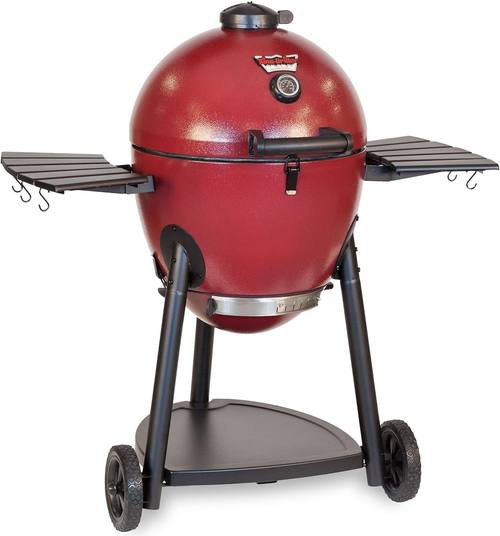
Char-Griller Akorn Kamado Kooker
Holds temp reasonably well, portable, cheap enough to learn on
Visit on Amazon →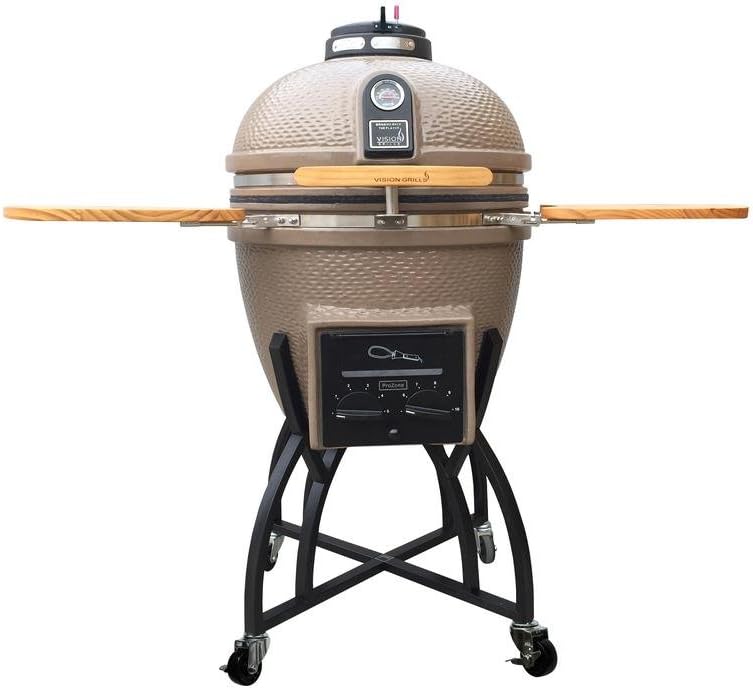
Vision Grills Kamado Professional Ceramic Charcoal Grill in Taupe with Grill ...
Experience the flavor of Kamado style cooking. The Vision Grills Kamado Pro Ceramic Charcoal Grill replicates wood oven cooking, providing the flexibility to sear, grill and smoke meats and vegetables
Visit on Amazon →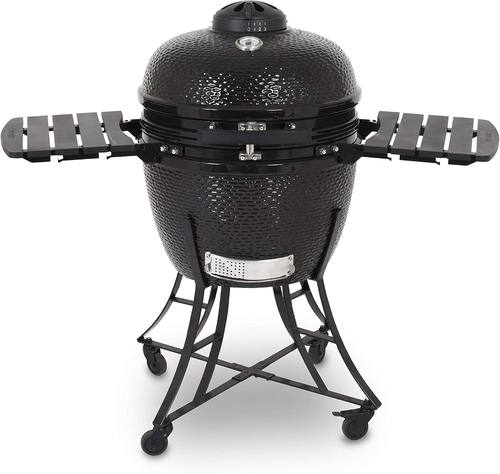
Pit Boss 71220 Kamado BBQ Ceramic Grill Cooker, 22 inch
Experience the flavor of Kamado style cooking. The Vision Grills Kamado Pro Ceramic Charcoal Grill replicates wood oven cooking, providing the flexibility to sear, grill and smoke meats and vegetables
Visit on Amazon →Pros
- Holds 225-250 for 6-8 hours on a full load of lump without major adjustments
- Weighs about 80 pounds, so one person can move it
- The cast iron grate that comes in the box is actually usable
- At ~$199 on sale, it's the cheapest way to learn kamado cooking
Cons
- The firebox liner cracks. Plan on replacing it within 12-18 months
- Doesn't hold heat like ceramic, so winter cooks eat more charcoal
- The bottom vent is fiddly. You'll overshoot temp at least once while you learn
- No warranty to speak of on the firebox. Char-Griller will sell you a replacement, but it's not free
Compared to the real thing
I own a Kamado Joe Classic II that I bought on Black Friday for ~$749. I've cooked on friends' Big Green Eggs for years. The Akorn is not those grills, and pretending otherwise does nobody any favors.
The difference is thermal mass. A ceramic kamado is a heat battery. You heat soak it for an hour, overshoot your target by 30 degrees, let it settle, and it will sit at 250 for ten hours because the ceramic is holding all that energy.
The Akorn's double-wall steel does a decent impression, but it loses heat faster. On a 40-degree Michigan morning, I'd burn through a full load of lump in about six hours holding 250.
The Big Joe would go twelve.
The other difference is the firebox. The Akorn's firebox is a thin ceramic liner that cracks. I replaced mine twice in three years. The first crack was my fault, I dumped cold water on a hot grill. The second one just happened, a hairline fracture that spread over a winter.
The Kamado Joe's firebox is thicker, better made, and covered by a lifetime warranty. I've cracked one of those too, and Kamado Joe shipped a replacement for free.
Bottom line: if you want to cook on a kamado and you're not sure you'll love it, buy the Akorn. If you know you're going to be doing this for the rest of your life, save up and buy ceramic.
Design
The Akorn is a steel-body kamado with a ceramic liner inside the cooking chamber and a steel cart with locking casters. It's got a 22.5-inch cooking grate, which is bigger than the 18-inch grate on a Large Big Green Egg, and the cast iron grate that comes with it is genuinely good. I've seared steaks on it at 600 degrees and the grate held up fine.
Assembly took me about 45 minutes with a socket set. The instructions are passable, which is high praise for this category. The cart is sturdy enough on flat ground, but it's not made for rough terrain. If you're wheeling it across a lawn, you're going to feel every bump.
The top vent has a sliding plate with numbered settings, which sounds handy but isn't. The numbers don't mean anything. You'll learn your own settings through trial and error, and you'll curse the thing when you overshoot by 30 degrees and have to choke it down.
One thing I'll give it: the Ash Kicker tray in the bottom is a genuinely smart design. You shake the grate handle to drop ash into the tray, then pull the tray out to dump it. No vacuum, no mess, no crawling on your hands and knees with a shop vac. It's a better ash management system than the Kamado Joe, and I'll die on that hill.
Performance
I cooked three briskets on the Akorn over the course of a year, plus dozens of pork shoulders, chickens, and a few steaks. Here's what I learned.
The Akorn holds temp, but it's not automatic. You have to learn its rhythms. I'd light a full chimney of lump, dump it in, open both vents wide until the internal temp hit 300, then close the bottom vent to the width of a pencil and the top vent to a crack.
It would settle at 225-250 and stay there for hours, drifting maybe 15 degrees over a long cook. That's acceptable.
That's not ceramic-level stability, but it's good enough to turn out a competition-worthy brisket.
The problem is the learning curve. I've been doing this for eighteen years, and it still took me three cooks to figure out the Akorn's vent settings. My first brisket on it came out good, my second was a hockey puck because I overshot temp and spent two hours fighting it back down, and my third was the best brisket I'd made in months.
It rewards patience, which is the same thing every kamado demands.
Where the Akorn struggles is high-heat cooking. Getting it to 600 for a sear is doable, but it burns through lump fast at that temp and the temperature swings get wild. I've seen it spike 100 degrees in a minute when the wind gusted. For low and slow, it's fine. For screaming hot searing, it's a handful.
Durability
This is where the Akorn earns its reputation as a starter grill. The steel body holds up fine. I've had mine for three years and the paint is faded but the structure is solid. The gasket, a fiberglass weave instead of felt, has held up better than the felt gasket on my Kamado Joe. Three years in and it's still sealing.
The firebox is the weak point. It's a thin ceramic liner that sits in the bottom of the cooking chamber. Mine cracked twice. The first time was my fault, thermal shock from dumping cold water on it. The second time was just wear. A hairline crack that opened up over a winter of freeze-thaw cycles. I found replacement fireboxes online for about ~$40 and swapped it out in ten minutes.
The cart is another weak spot. The casters are cheap plastic and one of mine cracked after two years. I replaced them with aftermarket locking casters for ~$15 and it's been fine since.
The math: ~$199 for the grill, ~$40 for a firebox, ~$15 for casters. That's ~$254 over three years. About 23 cents a day. The Big Joe at ~$1,499 would cost ~$1.37 a day over three years, and it'll outlive me. But if you're not sure you're ready to commit, the Akorn is the cheaper way to find out.
Should you buy it?
If you're new to kamado cooking and you're not sure you'll use it every weekend, buy the Akorn. It'll teach you the fundamentals, it'll turn out good food, and when you're ready to upgrade, you'll know exactly what you want in a ceramic grill.
If you're already a kamado person and you're looking for a backup or a tailgating rig, the Akorn is a fine choice.
If you think you're going to buy one kamado and keep it for fifteen years, skip it and save for ceramic.
I still use my Akorn. It's my backup, my travel grill, and the one I hand to friends who want to learn. It's not the best kamado I own. It's the most honest one.
Update, March 2025: I've had two readers write in about the Akorn's firebox cracking within the first year, both without any thermal shock. Char-Griller's customer service replaced one of them after a phone call, the other reader gave up and bought a Kamado Joe Classic II. Worth knowing before you buy.
Next up on my bench: I'm testing the FlameBoss 500 temperature controller to see if it can tame the Akorn's temperature swings. If it can hold 225 through a thunderstorm, I might have to revise my opinion on cheap grills.