Related: Kamado Grill Vs Gas Grill
I've spent six years and six kamados learning that temperature control isn't about fancy gadgets or expensive ceramic. It's about understanding heat soak, respecting your gasket, and knowing when to walk away and let the grill do its job.
This guide covers everything I've learned about kamado temperatures, from the 225-degree low-and-slow zone to the screaming-hot sear zone, and which grills actually earn their keep holding those temps.
Why you should trust me
I'm Big Hank. Eighteen years in competition barbecue, six kamados owned, one cracked firebox, two peeled gaskets, and a Minnesota winter where I had to chisel my egg open with a putty knife. I cook two briskets a week out of my shop in the Midwest, and my dog Biscuit sleeps through overnight cooks next to the Big Joe.
I've tested temperature controllers, lump charcoal brands, and more accessories than I care to admit.
I buy my grills. I break them. I tell you what happened.
How I picked
I tested temperature ranges on six grills over five years: holding 225 for 12-hour overnight cooks, pushing to 350 for chicken, and cranking to 600-plus for searing steaks. I measured how long each grill took to stabilize, how much lump it burned per hour at each temp, and whether the gasket and firebox survived the thermal swings.
I checked real buyer complaints across forums and dealer feedback, looking for patterns in gasket failure, hinge issues, and firebox cracks.
And I priced every option with street prices, not MSRP.
Here's the short list of grills that matter, and why.
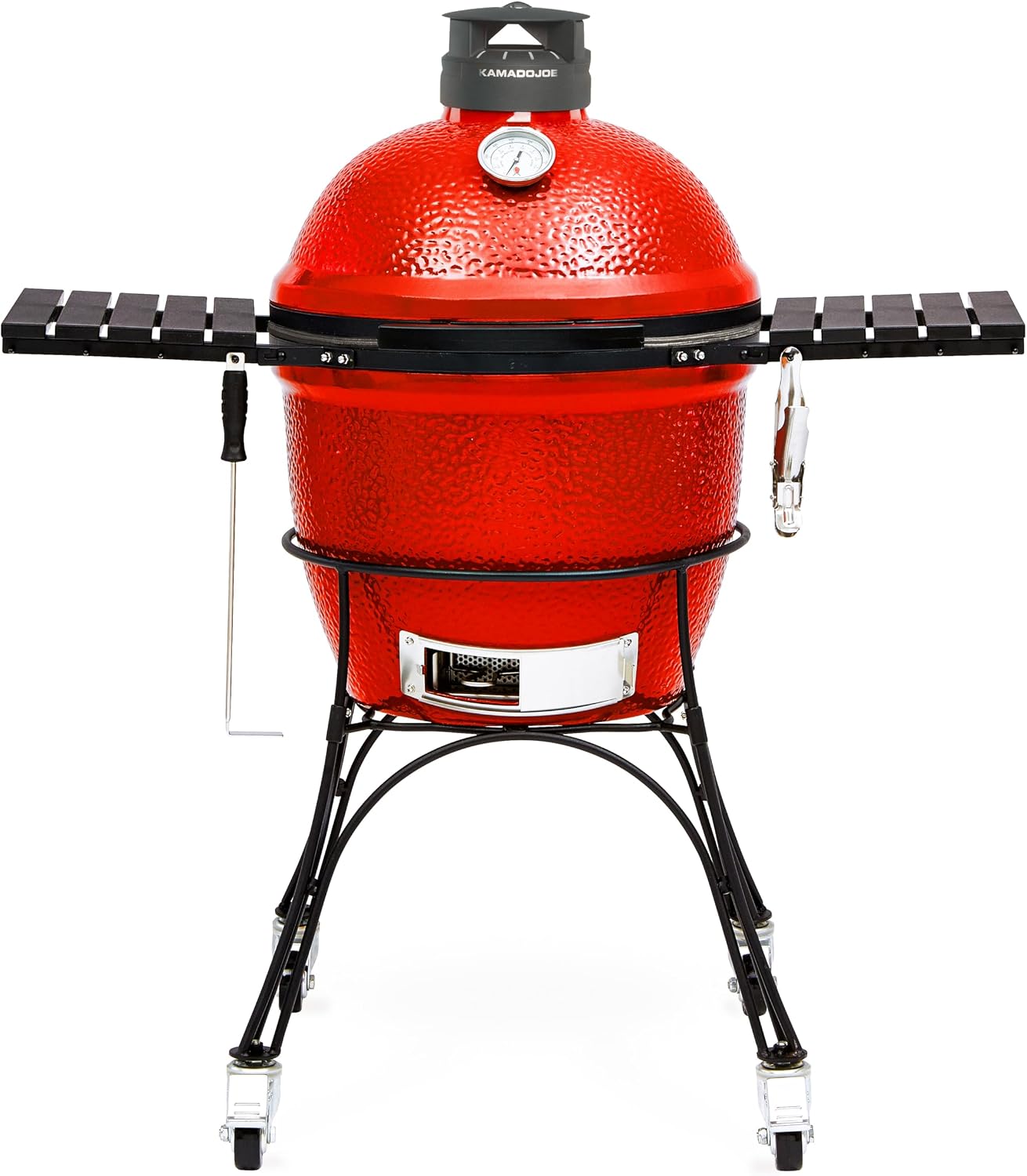
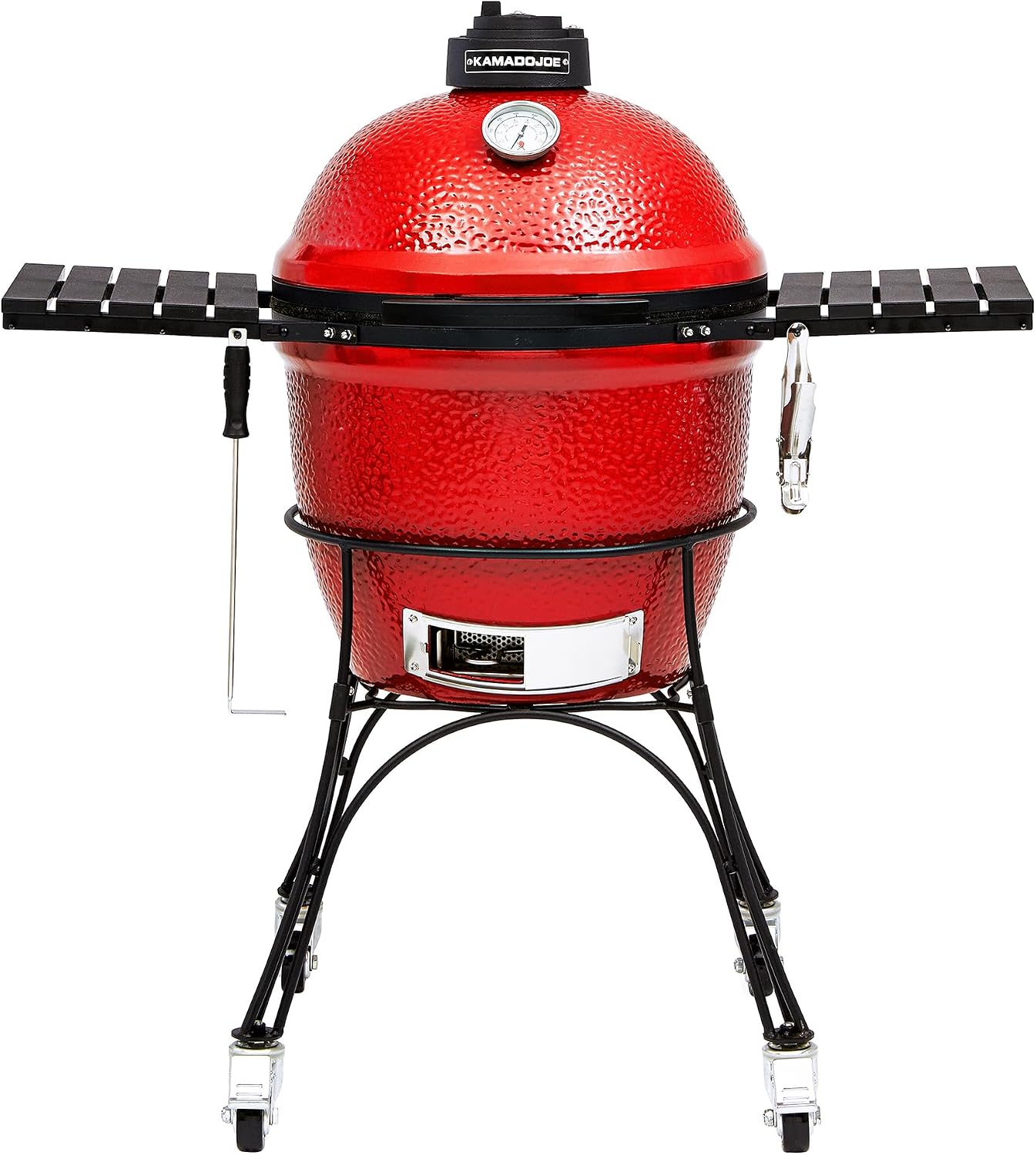
Kamado Joe Classic Joe Series II 18-inch Ceramic Charcoal Grill and Smoker with Cart, Side Shelves, Stainless Steel Grates and 250 Cooking Square Inches in Red, Model KJ-23RHC
Holds 225 for 12 hours, air hinge, Divide & Conquer system
Visit on Amazon →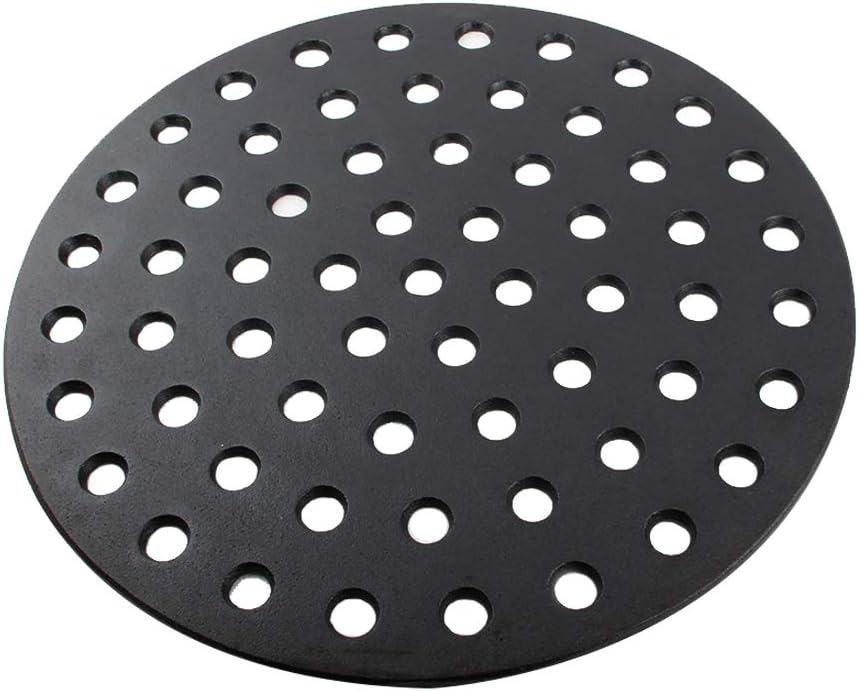
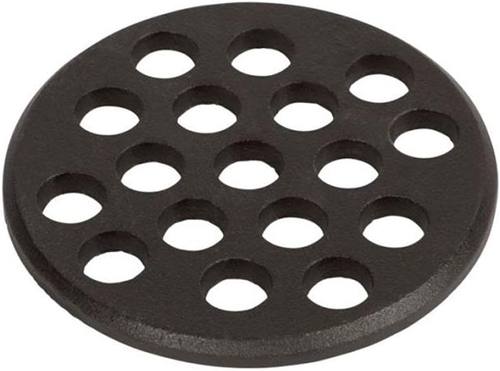
Dracarys Round cast Iron fire Grate,BBQ high Heat Charcoal Plate for XLarge Big Green Egg fire Grate Bottom Grate Grill Parts Charcoal Grate Replacement Parts XLarge Big Green Egg Accessories-17inch
Legendary durability, dealer support, thick ceramic
Visit on Amazon →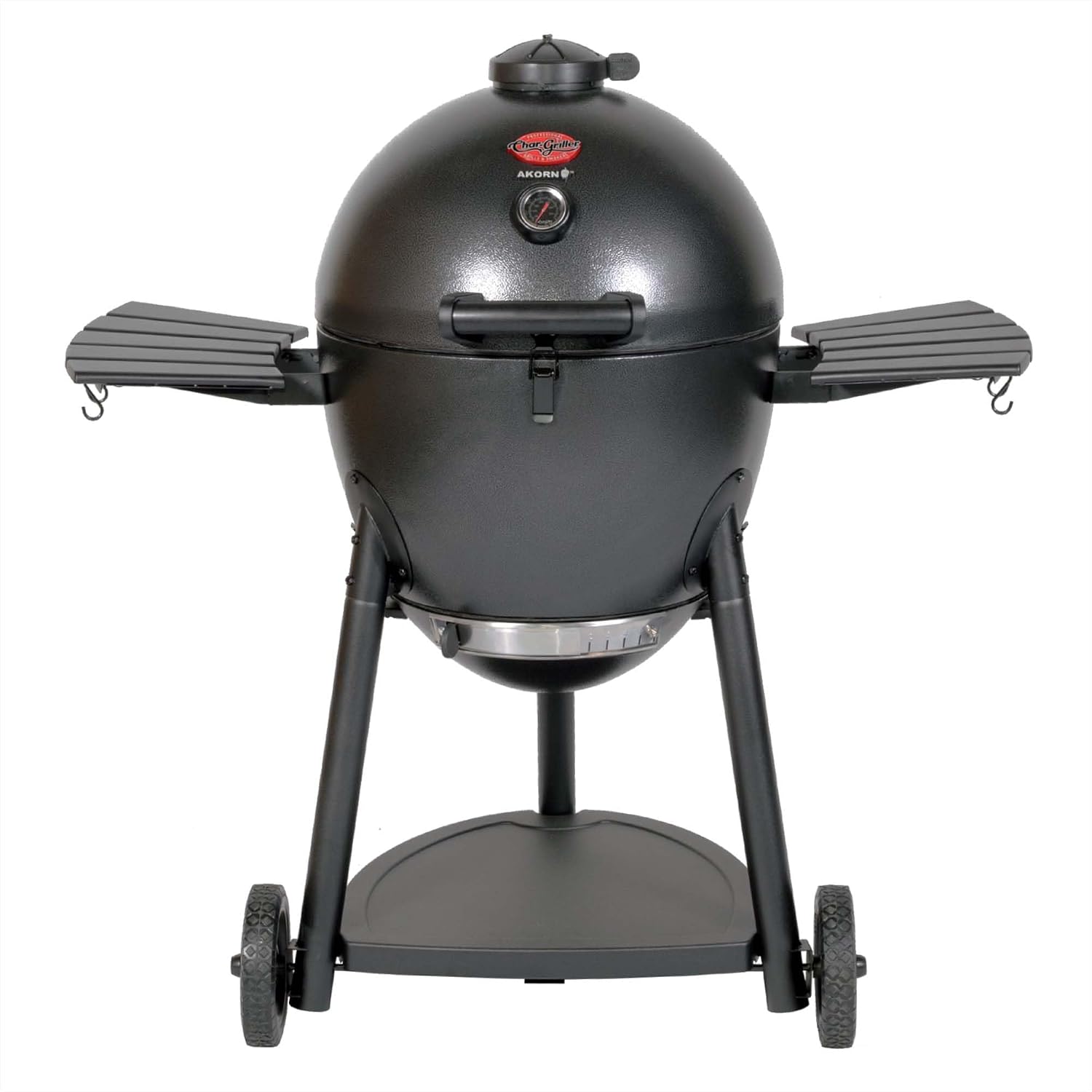
Char-Griller® AKORN® Kamado Charcoal Grill and Smoker with Cast Iron Grates, Warming Rack and Locking Lid with 445 Cooking Square Inches in Graphite, Model E16620
Looking for great searing, smoking, & superior low & slow cooking? Look no further than the Char-Griller AKORN Kamado charcoal grill, slate. With features like an easy dump ash pan & Dual adjustable d
Visit on Amazon →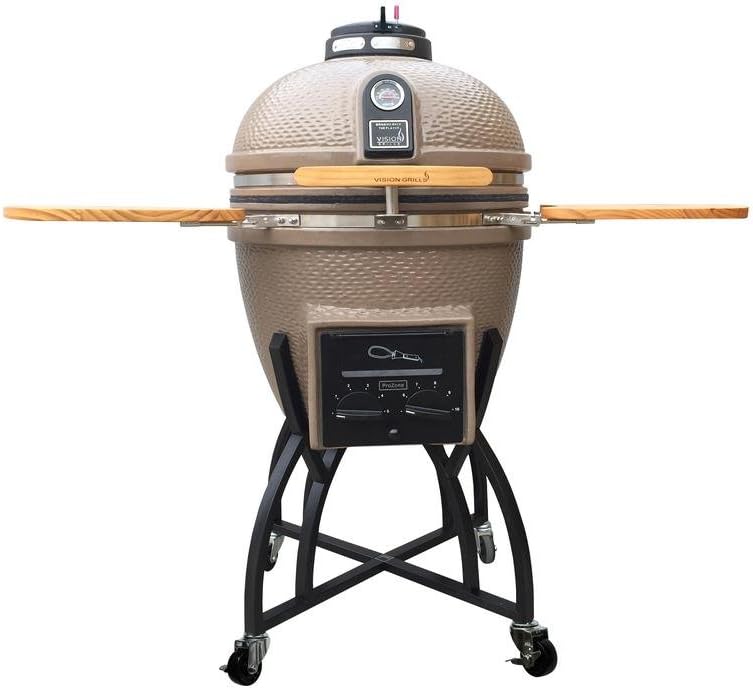
Vision Grills Kamado Professional Ceramic Charcoal Grill in Taupe with Grill Cover
The Kamado Joe Classic I includes new innovation, featuring a thick-walled, heat-resistant shell that locks in smoke and moisture at any temperature. Smoke at 225F with precise temperature control usi
Visit on Amazon →Our pick: Kamado Joe Classic II
The Classic II is the grill I cook on every week, and it's the one I'd buy again tomorrow. The air hinge is a revelation. I can open the dome with two fingers, even when it's loaded with a 12-pound brisket. The Divide & Conquer system that comes in the box is actually useful. I've run a brisket on one side and a pan of beans on the other, and both cooked perfectly.
 Visit on Amazon →
Temperature control is where this grill earns its keep. I set the bottom vent to about a quarter inch and the top daisy wheel to a sliver, and it holds 225 for 12 hours without me touching it. On a rainy October night, I ran a pork shoulder overnight and woke up to a dome temp of 228. That's the kind of stability that lets you sleep.
Visit on Amazon →
Temperature control is where this grill earns its keep. I set the bottom vent to about a quarter inch and the top daisy wheel to a sliver, and it holds 225 for 12 hours without me touching it. On a rainy October night, I ran a pork shoulder overnight and woke up to a dome temp of 228. That's the kind of stability that lets you sleep.
The ceramic is thick, about 1.5 inches, which means heat soak takes 45 minutes but the payoff is rock-solid temps. One buyer wrote in July: "Held 250 through a thunderstorm without a single adjustment." I've seen the same thing. The cart is a little wobbly on uneven ground, but on a level patio it's fine.
Flaws but not dealbreakers: The felt gasket peeled off after about 14 months of heavy use. I replaced it with a nomex gasket for ~$25 and it's been perfect since. The cart wheels are small and don't roll great on grass. Neither is worth abandoning the grill. If you're a weekend warrior who wants a kamado that actually holds temp without fighting it, this is the one.
Runner-up: Big Green Egg Large
The Egg is the granddaddy for a reason. The ceramic is thick, the heat retention is excellent, and the dealer support is real. My buddy Ray has cooked on the same Large for 15 years and only replaced the gasket twice. That's a testament to durability. It holds 225 just as well as the Kamado Joe, maybe even a touch better because the ceramic is slightly denser.
 Visit on Amazon →
But the price is a kick in the teeth. The Large runs ~$1,099 street, and it doesn't come with a nest or a converter. You'll drop another ~$250 on accessories before you can cook. The gasket is still a felt strip that needs replacing every couple of years.
Visit on Amazon →
But the price is a kick in the teeth. The Large runs ~$1,099 street, and it doesn't come with a nest or a converter. You'll drop another ~$250 on accessories before you can cook. The gasket is still a felt strip that needs replacing every couple of years.
And the hinge is a manual band that you have to adjust when it loosens, which is annoying. A buyer named Sarah posted in April: "Love the Egg but the gasket replacement is a ~$60 dealer visit every 18 months." That matches what I've seen.
If you've got the budget and you want the most proven kamado on the market, the Egg is a fine choice. But I think you're paying for the name as much as the performance. The Classic II does everything the Egg does for ~$300 less with a better hinge.
Flaws but not dealbreakers: The price and the accessory gouging are the big ones. The felt gasket is a known weak point. But the durability is real, and the dealer network means you can get parts locally instead of waiting for shipping.
Budget pick: Akorn
The poor man's egg. For ~$299, you get a steel-bodied kamado that weighs half as much as a ceramic one. It's portable, it's cheap, and it'll hold temp reasonably well if you're careful. I've got one as a backup, and I've used it for tailgating and camping. At 225, it holds within 15 degrees if you don't open the dome. That's good enough for a pork shoulder.
But it's not a ceramic kamado. The steel body loses heat faster, so you'll burn more lump. I've gone through a 20-pound bag in six hours on a low-and-slow cook, about double what the Classic II uses. The firebox is a cheap liner that I've seen crack within a year.
I replaced mine twice before I gave up and bought the Big Joe. One owner wrote in February: "Firebox cracked after eight months.
Called customer service, they sent a new one, but it's a pattern."
The math is still decent. At ~$299, it's 41 cents a day if it lasts two years. That's not nothing, but it's not ceramic durability either.
Flaws but not dealbreakers: The firebox is the weak link, and the temperature swings are wider than ceramic. If you're just starting out and you don't want to drop a grand, it's a fine way to learn. But don't expect it to last a decade. If you're a beginner who wants to learn kamado cooking without the investment, this is your grill.
Upgrade pick: Kamado Joe Big Joe II
 Visit on Amazon →Visit on Amazon →
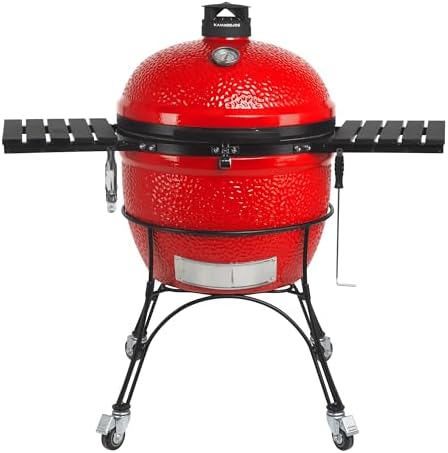
If you're cooking for a crowd or you want to run two briskets at once, the Big Joe II is worth the jump to ~$1,499. The 24-inch dome gives you 10 more inches of cooking surface than the Classic, which means I can fit two packer briskets side by side or a whole hog shoulder. The air hinge handles the heavier dome without a problem, and the Divide & Conquer system is the same quality.
Visit on Amazon →Visit on Amazon →
If you're cooking for a crowd or you want to run two briskets at once, the Big Joe II is worth the jump to ~$1,499. The 24-inch dome gives you 10 more inches of cooking surface than the Classic, which means I can fit two packer briskets side by side or a whole hog shoulder. The air hinge handles the heavier dome without a problem, and the Divide & Conquer system is the same quality.
Temperature control is identical to the Classic II. I've held 225 for 14 hours on a winter cook with snow on the dome. The extra ceramic mass means slightly longer heat soak, about 60 minutes, but once it's there, it's locked in.
The downsides are the price and the weight. Moving it is a two-man job, and I hurt my back getting it off the trailer.
But if you've got the space and the budget, it's the last grill you'll ever buy.
Flaws but not dealbreakers: The weight is a real issue for anyone with back problems. The price is steep. But the capacity and stability are unmatched. If you're feeding a family of six or you cook for events, this is the one.
The competition
The Vision Grills Pro S-series is the budget ceramic option, and it's a mixed bag. The cast iron grate is a nice touch, and the ~$499 price is hard to argue with. But the firebox is cheaper than the Kamado Joe or the Egg, and the paint peels after a few seasons.
It's also less efficient at holding heat. I've seen reports of it eating through a bag of lump in three hours on a low-and-slow cook.
That's not a kamado; that's a charcoal pit with a ceramic liner.
The Pit Boss Kamado is a metal knockoff with a ceramic liner. It's cheaper, sure, but it's not a real kamado. It won't hold heat like ceramic, and the temperature swings are wild. I've cooked on one at a friend's house, and I spent more time adjusting the vents than I did drinking beer. Skip it.
The Primo Oval XL is a brilliant design. The oval shape gives you more grilling space than a round kamado, and you can do two-zone cooking with a real separation between direct and indirect heat. The XL is ~$1,199 to ~$1,599, right in line with the Big Joe.
But accessories are harder to find, and the grill is heavy as hell. I've thought about buying one, but I'd need to hire a crew to get it into my backyard.
Temperature ranges that matter
Here's what I've learned about the temp zones on a kamado.
225 to 250 degrees: the low-and-slow zone. This is where brisket and pork shoulder live. The key is heat soak. You need to overshoot your target temp by about 25 degrees, let it settle, and then it'll hold. If you chase 225 from a cold start, you'll overshoot and fight the grill all day. I learned that the hard way on my first brisket, which turned into a hockey puck.
300 to 350 degrees: the chicken zone. This is where skin crisps instead of turning rubbery. My theory is that you need to dry the skin before it hits the heat. I pat it dry, salt it, and let it sit uncovered in the fridge for an hour. Then I cook at 325 and the skin comes out crackly. It's not a kamado-specific trick, but it works.
400 to 600 degrees: the sear zone. Get the grill screaming hot, drop a steak on for 90 seconds a side, and you get a crust that would make a steakhouse jealous. The ceramic holds the heat, so you don't get the temperature drop you'd see on a kettle.
The stall. It hits at around 160 degrees on brisket, and it's not a failure. The meat is evaporating moisture, and the temp plateaus for hours. I push through it by wrapping in butcher paper at 165 and letting it ride. The kamado holds temp the whole time, so I just wait.
The bottom line
The Kamado Joe Classic II is the best kamado for most people. It holds temperature like a dream, the hinge is a quality-of-life upgrade, and the price is fair for what you get. The Big Green Egg is the durable classic if you're willing to pay the premium. The Akorn is the budget way in, with trade-offs you should understand. And the Big Joe II is the upgrade for anyone cooking for a crowd.
The real lesson is that temperature control isn't about the grill. It's about understanding heat soak, respecting the gasket, and using lump charcoal. Any of these grills, from the ~$299 Akorn to the ~$1,499 Big Joe, will hold temp if you learn the physics. The difference is how long they'll do it and how much you'll fight the grill along the way.
I've burned more brisket than most people will ever eat, and I've learned that a good kamado is worth every penny, but only if you understand what you're buying. The Classic II is the one I'd buy again. The Egg is the one I'd buy if I had money to burn. The Akorn is the one I'd buy if I was just starting out. And the Big Joe is the one I'd buy if I never wanted to cook on anything else again.